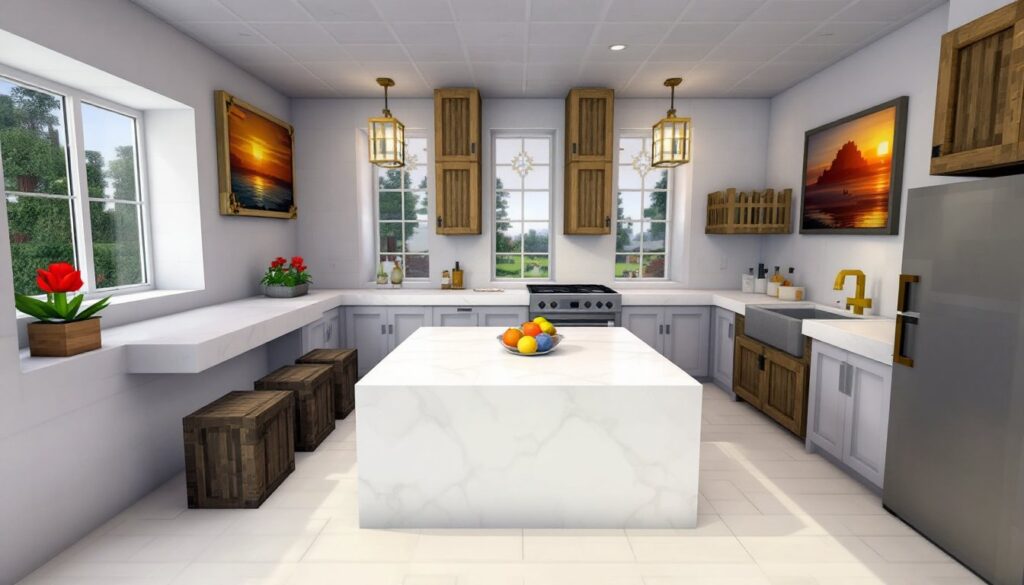

Building a kitchen in Minecraft isn’t just about dropping a crafting table in the corner and calling it done. A well-designed kitchen adds life to virtual homes, creates a focal point for multiplayer servers, and gives players a space that feels functional even when the game mechanics don’t require it. Whether constructing a cozy cottage or a modern mansion, the kitchen often becomes the heart of the build. This guide walks through the blocks, layouts, and techniques needed to create kitchens that look sharp and fit the style of any Minecraft home.
Table of Contents
ToggleKey Takeaways
- Kitchen design in Minecraft transforms homes into immersive spaces by serving as social hubs, focal points, and aesthetically grounded builds that signal domesticity and attention to detail.
- A successful Minecraft kitchen relies on 3–4 core block materials (such as smooth stone for counters, oak planks for cabinetry, and quartz for modern accents) layered with stairs, slabs, and trapdoors to create visual depth.
- A basic 7×9 footprint kitchen includes a floor plan, base counters at waist height, functional appliances (furnace, refrigerator, sink), upper cabinets, and optional islands with proper lighting and decor.
- Modern kitchen designs emphasize clean lines with white concrete and quartz, while rustic styles prioritize wood textures, exposed beams, and organic materials like cobblestone and oak logs.
- Advanced features such as redstone-controlled lighting, hidden storage with sticky pistons, and creative appliance representations (stonecutters as microwaves, grindstones as mixers) elevate kitchens from purely decorative to immersive and functional.
Why Kitchen Design Matters in Minecraft
Minecraft kitchens serve zero gameplay function for survival needs, players don’t cook on stoves or store food in fridges, but they’re one of the most common rooms builders include. The reason? Kitchens ground a build in reality. They signal domesticity, comfort, and attention to detail.
In multiplayer servers and realm builds, kitchens become social hubs. Players gather around islands, set up roleplay scenarios, or use the space as a staging area for cooperative projects. A thoughtfully designed kitchen elevates the entire build, much like how real-world kitchen design ideas transform the feel of a home.
From a design perspective, kitchens offer creative constraints. Limited block palettes force builders to think about texture contrast, vertical layering, and spatial flow. The challenge of making a recognizable appliance out of iron blocks and buttons sharpens building skills that carry over into every other room.
Essential Blocks and Materials for Minecraft Kitchens
Every Minecraft kitchen starts with a core palette of blocks that mimic real materials. Stone variants (smooth stone, polished andesite, or concrete) work for countertops and flooring. Wood planks (oak, birch, spruce, or dark oak) bring warmth to cabinetry and islands. Quartz blocks or white concrete create clean, modern surfaces.
For appliances, use these blocks to build recognizable shapes:
- Refrigerators: Iron blocks or white concrete with a button or lever as a handle. Add a trapped chest behind an iron door for functional storage.
- Ovens and stoves: Furnaces (obviously functional), smokers, or black concrete with a campfire underneath for a flame effect. Use iron trapdoors as oven doors.
- Sinks: Cauldrons filled with water, or a hopper set into a countertop with a water source block above it (covered by a trapdoor).
- Cabinets: Trapdoors (spruce and dark oak read as wood grain), barrels placed sideways, or rows of chests concealed behind decorative blocks.
Texture mixing is critical. Pair smooth stone counters with oak trapdoor cabinet fronts. Use slabs and stairs to create depth, counters shouldn’t be flat planes. Add fences as pot racks, item frames with food items as decor, and paintings to break up wall space. Lighting comes from lanterns, sea lanterns embedded in ceilings, or glowstone hidden behind white stained glass panels for under-cabinet glow.
Avoid overloading the space with too many block types. Stick to three or four core materials and layer them with stairs, slabs, and trapdoors for detail.
Step-by-Step Guide to Building a Basic Minecraft Kitchen
Start with a clear floor plan. A 7×9 block footprint provides enough room for an L-shaped counter, an island, and walking space. Mark the perimeter with your chosen flooring, smooth stone slabs or polished andesite work well.
Step 1: Lay the Floor and Walls
Place flooring blocks first. If using slabs, place them on the bottom half of the block to keep the floor level with doorways. Build walls to a height of four blocks, this allows for upper cabinets and headroom without wasted vertical space.
Step 2: Install Base Counters
Along two adjacent walls, place smooth stone slabs at waist height (one block up from the floor). Use barrels or chests underneath the slabs to suggest storage. Front these with spruce trapdoors in the closed position to mimic cabinet doors.
Step 3: Add Appliances
Position a furnace or smoker along one counter run, set flush with the countertop. Place an iron block stack (three blocks high) in a corner or against a wall for a refrigerator. Add a button at chest height for the handle. Install a cauldron filled with water in the counter as a sink, use a lever on the wall above as a faucet.
Step 4: Build Upper Cabinets
Two blocks above the countertop, place another row of spruce trapdoors or barrels to represent upper storage. Leave gaps above the stove (for a hood) and sink (for a window). Use stairs placed upside-down under the upper cabinets to create a lip or trim.
Step 5: Add an Island (Optional)
In the center of the room, build a 3×2 block island using the same counter material. Surround it with oak fences or dark oak stairs as seating. Place trapdoors around the base as a toe kick or decorative skirt.
Step 6: Lighting and Details
Hang lanterns from the ceiling or recess sea lanterns into the ceiling blocks. Add item frames with food (bread, fish, golden carrots) on walls or counters. Place flower pots with bamboo or flowers on the island. Use paintings or maps to fill blank wall areas.
This basic build can be adapted to any style by swapping block palettes, blackstone and crimson planks for a nether-themed kitchen, prismarine and cyan terracotta for an underwater base.
Creative Kitchen Layout Ideas for Your Minecraft Home
Layout determines both aesthetics and flow. Three common configurations work well in Minecraft builds, each suited to different home styles and space constraints.
Modern Kitchen Designs
Modern kitchens emphasize clean lines, open layouts, and monochrome palettes. Use white concrete, smooth quartz, and gray concrete as primary blocks. Counters should be sleek, quartz slabs with minimal clutter. Appliances integrate flush into cabinetry: conceal chests behind iron doors activated by stone buttons.
Islands dominate modern layouts. Build a large central island (5×3 blocks) using quartz or white concrete, with polished blackstone or dark oak stairs as seating. Hang end rods or chains with lanterns above the island to mimic pendant lighting. Install glass panes as a backsplash behind the stove, backlit with glowstone or sea lanterns for an even glow.
Flooring typically uses smooth stone, polished andesite, or white concrete. Walls stay neutral, white concrete or smooth stone, with black concrete accents around windows or doorways. Avoid wood textures except as rare accent pieces. The goal is minimalism: every block serves a visual purpose, and negative space matters. Drawing inspiration from curated home product guides can help refine the balance between function and form.
Rustic and Farmhouse Kitchen Styles
Rustic kitchens lean into wood, stone, and organic textures. Use oak planks, spruce logs, and cobblestone as foundational materials. Counters made from spruce slabs or smooth stone feel grounded and warm. Exposed oak beams (log blocks) across the ceiling add character.
Instead of sleek cabinetry, use barrels placed upright or sideways as visible storage. Oak fences serve as pot racks suspended from the ceiling, with item frames holding tools or food. Build a large stone fireplace along one wall with a campfire or furnace set into it, creating a hearth-style cooking area.
Islands in rustic kitchens use stripped oak logs for legs and oak slabs for the surface. Surround with oak stairs as seating. Flooring works best in oak planks or cobblestone, avoiding overly smooth blocks. Add lanterns, flower pots with crops (wheat, carrots), and hay bales in corners to reinforce the farmhouse vibe.
Windows should be large and plentiful, oak trapdoors as shutters, glass panes for natural light. This style thrives in cottages, survival bases, and village-themed builds. The charm lies in imperfection: uneven textures, mixed wood tones, and visible storage that feels lived-in, much like the aesthetic found in home design ideas showcasing rustic living.
Advanced Features and Functional Kitchen Details
Once the basics are in place, advanced builders add features that push kitchens from decorative to immersive. Redstone lighting controlled by levers or daylight sensors lets players turn lights on and off. Wire redstone lamps behind white stained glass panels under cabinets for under-counter lighting that activates with a switch.
Hidden storage improves both aesthetics and function. Use sticky pistons to conceal chest rooms behind a wall of cabinets, flip a lever, and a section of the wall retracts to reveal a pantry. Alternatively, trapdoors on barrels or hoppers blend storage into countertops without visual clutter.
Functional brewing stations double as coffee makers or beverage bars. Place a brewing stand on a counter with glass bottles in item frames nearby. Add cauldrons filled with water and dyed leather armor in adjacent frames to suggest a variety of drinks.
For multiplayer servers, chest-based pantries with hoppers feeding into item sorters keep communal kitchens organized. Label chests with item frames or signs. Install a composter near a window or back door as a compost bin, it’s a small detail that adds realism.
Decorative appliances like dishwashers, microwaves, and coffee machines require creativity. A stonecutter embedded in a counter reads as a microwave. A grindstone can pass for a stand mixer. Observers or dispensers with buttons mimic dishwasher fronts. The key is using block shapes and textures to suggest function, even when none exists.
Safety note: Complex redstone builds require planning. Test circuits in creative mode before installing them in survival builds to avoid wasting materials or creating unintended loops.