
Kitchen design in 2024 isn’t about safe, sterile showrooms anymore. Homeowners are ditching the all-white builder-grade look in favor of warmer, bolder, and more personalized spaces that actually feel lived-in. From material choices that nod to the outdoors to tech that’s finally useful instead of gimmicky, this year’s trends reflect a shift toward kitchens that work harder and look better doing it. Whether someone’s planning a full gut or just freshening up existing cabinets and counters, understanding what’s gaining traction, and what’s worth the investment, can make the difference between a dated flip and a kitchen that holds its value.
Table of Contents
ToggleKey Takeaways
- Kitchen design trends 2024 prioritize natural materials like soapstone, quartersawn white oak, and handmade tiles over sterile, builder-grade finishes.
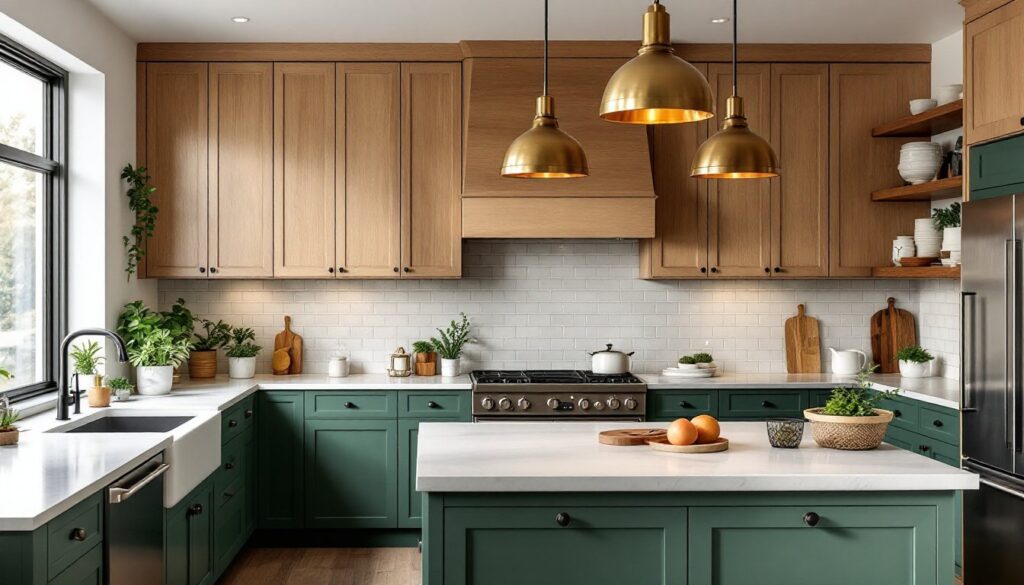
- Bold color palettes—deep greens, charcoal grays, and navy blues—replace all-white kitchens, with two-tone cabinetry providing an accessible entry point for homeowners.
- Smart kitchen technology, including induction cooktops and voice-activated faucets, is becoming standard in mid-range remodels and improves both function and hygiene.
- Statement lighting fixtures and mixed metal finishes create visual interest and personality by layering brass, matte black, and brushed nickel rather than matching hardware.
- Open shelving and glass-front cabinets offer practical storage with visual breathing room when styled intentionally with a limited color palette and proper weight distribution.
- Investing in durable, well-researched upgrades—from hardwax oil finishes to PVD metal coatings—ensures kitchens hold long-term value while reflecting personal style.
Natural Materials Take Center Stage
Wood, stone, and clay are back, and not just as accents. Quartersawn white oak cabinets, soapstone countertops, and terracotta tile backsplashes are showing up in kitchens from suburban ranch homes to urban condos. The appeal is straightforward: these materials age visibly but gracefully, developing patina instead of looking worn out.
Soapstone, for example, darkens over time and can be sanded to remove scratches, something laminate and even quartz can’t claim. It’s softer than granite (around 2.5–3.5 on the Mohs scale), so it will nick if someone drops a cast-iron pan on it, but many homeowners prefer that trade-off for the matte, hand-rubbed look. Expect to pay $70–$120 per square foot installed, depending on slab thickness and region.
Wood cabinetry is moving away from painted finishes toward clear-coated or oiled hardwoods. Rift-sawn white oak offers tight, linear grain with minimal fleck, giving a cleaner look than the cathedral patterns of plainsawn lumber. It’s also more stable, with less seasonal movement, important in a kitchen where humidity swings from boiling pasta to running the range hood. For a DIY cabinet refresh, stripping old paint and applying a hardwax oil (like Rubio Monocoat or Osmo) brings out natural grain without the VOC load of traditional polyurethane.
Clay and terracotta tiles, especially zellige and handmade Spanish or Mexican styles, are replacing subway tile. These aren’t precision-cut porcelain: expect variation in size, thickness, and glaze. That means more careful layout and a skilled tile setter if someone’s hiring out. Thin-set mortar needs to be back-buttered, and grout lines will be wider and less uniform. But the depth and movement they add, especially under task lighting, justify the extra labor for many projects.
Bold Color Palettes Replace All-White Kitchens
The all-white kitchen had its run, but 2024 is leaning into color, and not just a single accent wall. Deep greens, warm terracottas, charcoal grays, and even navy blues are being used on cabinetry, islands, and built-ins. The shift reflects a broader move in <a href="https://howdencastle.com/interior-design-color-trends-2024/”>interior design color palettes toward spaces that feel grounded and less clinical.
Painting existing cabinets is one of the most cost-effective kitchen updates, but it’s also one of the most labor-intensive if done right. Proper prep is non-negotiable: TSP wash, light sanding with 150–220 grit, and a bonding primer (like STIX or BIN shellac-based) before topcoat. Skipping the primer or using wall paint instead of cabinet-grade enamel will lead to chipping within months. Two coats of a waterborne alkyd or acrylic enamel (Benjamin Moore Advance, Sherwin-Williams Emerald Urethane) offer durability close to factory finishes, but each coat needs 16–24 hours to cure between applications. Factor in a full week if doors and drawer fronts are being painted off-site with proper drying time.
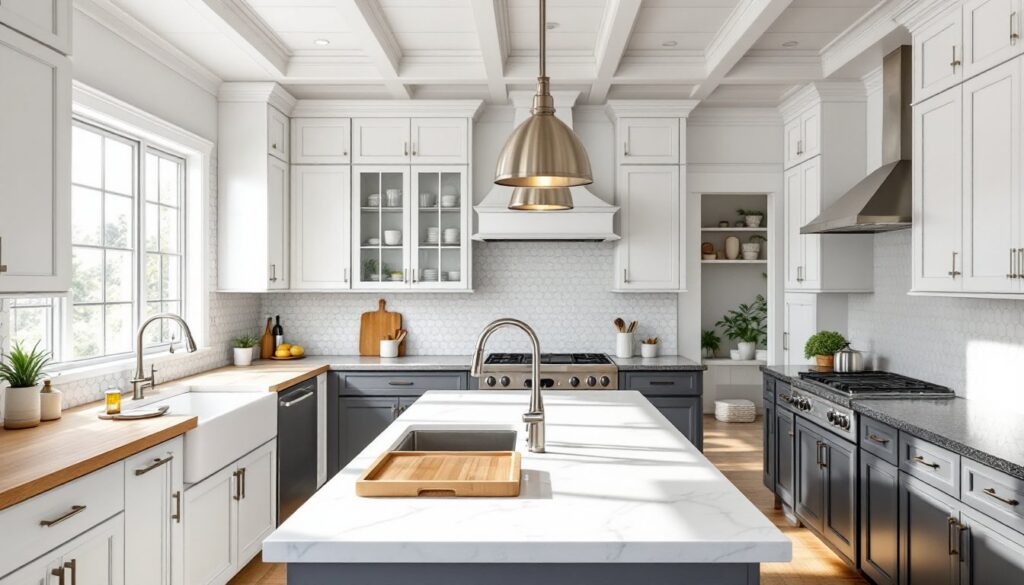
Two-tone cabinetry is common: darker lowers (forest green, charcoal) with lighter uppers or open shelving. This visually anchors the room and hides wear near the floor. If someone’s doing a DIY two-tone job, it’s easier to paint lowers first, let them cure, then mask and tackle uppers.
For those hesitant to commit to painted cabinets, colorful tile backsplashes or a bold range hood can introduce the trend without the same level of investment. Powder-coated range hoods in custom colors (available from shops like Vent-A-Hood or custom metal fabricators) run $1,200–$3,000, depending on size and CFM requirements. Make sure the hood’s CFM rating matches the cooktop BTUs, generally, 1 CFM per 100 BTUs is the baseline for gas ranges.
Smart Kitchen Technology Becomes Standard
Smart appliances are finally moving past the novelty phase. Induction cooktops with Bluetooth connectivity, refrigerators with internal cameras, and faucets with voice-activated flow control are showing up in mid-range remodels, not just luxury builds.
Induction cooking, in particular, is gaining ground as electric service upgrades become more common (and gas bans spread in some municipalities). Induction is faster and more energy-efficient than gas or traditional electric coil, transferring about 85–90% of energy directly to the pan versus 40% for gas. The trade-off: it requires magnetic cookware (cast iron, stainless with magnetic bases) and a 240V, 40–50 amp circuit. Retrofitting an older kitchen may mean a panel upgrade if the existing service is only 100 amps. Budget $1,500–$2,500 for an electrician to run new wire and install a dedicated breaker, assuming no major panel work.
Smart faucets, like those from Delta (with Touch2O) or Moen (with MotionSense), aren’t just about convenience. When someone’s handling raw chicken or covered in dough, turning on water with an elbow tap or wave prevents cross-contamination. Most require a 120V outlet or battery pack under the sink. If there’s no outlet, adding one is straightforward for a licensed electrician but does require a GFCI-protected circuit per NEC 210.8(A).
Wi-Fi-enabled ovens and ranges allow remote preheat and temperature monitoring, which is genuinely useful for long braises or bread baking. Brands like GE, Bosch, and Thermador offer app control as standard on many mid-tier models. Just make sure the kitchen has solid Wi-Fi coverage: a mesh node near the range may be necessary in larger homes.
One caution: smart appliances often have shorter lifespans for their tech components than their mechanical guts. A control board or touchscreen might fail in 5–7 years, even if the compressor or heating element is fine. Verify parts availability and warranty coverage before committing to a high-tech model.
Statement Lighting Fixtures as Focal Points
Recessed cans are out: sculptural pendants, oversized drum shades, and multi-arm chandeliers are in. Lighting is being treated as jewelry for the kitchen, and it’s one of the easiest swaps a DIYer can make, assuming the electrical box is rated for the fixture weight.
Most builder-grade pancake boxes are rated for 50 pounds max. If someone’s swapping a basic dome light for a 30-pound iron-and-glass pendant, the existing box is fine. But large multi-light chandeliers often exceed that. Installing a fan-rated box (rated to 70+ pounds) involves cutting into drywall or plaster, securing a metal brace between joists, and patching. It’s a half-day job for someone comfortable with drywall and a reciprocating saw.
Pendants over islands are the most common statement piece. The standard height is 30–36 inches above the countertop, but that assumes an 8-foot ceiling. For 9- or 10-foot ceilings, fixtures can hang lower without crowding sightlines. Use adjustable-height cord or chain, and test the height with a cardboard mock-up before final install.
Dimmer switches are non-negotiable for task-to-ambient flexibility. LED-compatible dimmers (Lutron, Leviton) prevent flicker and buzzing. If the existing switch is a standard toggle and the fixture is LED, swapping to a Lutron Diva or Caseta dimmer takes 15 minutes and improves usability dramatically. For spaces inspired by recent broader interior trends, dimmable lighting offers the flexibility to shift mood.
Track lighting and picture lights are making a return, too, especially over open shelving or in kitchens with art. Low-voltage LED track systems (WAC, Tech Lighting) offer tighter beam control than line-voltage, which helps avoid glare on glassware or polished surfaces.
Mixed Metals and Textured Finishes
Matchy-matchy hardware is done. Kitchens in 2024 are layering brass cabinet pulls, matte black faucets, stainless appliances, and brushed nickel light fixtures in the same space, and it works, as long as there’s intentionality.
The key is to repeat each finish at least twice. For example, if the range hood is matte black, add black cabinet handles or a black pot filler. If the faucet is unlacquered brass, echo it with brass drawer pulls or a brass pendant. This creates visual rhythm instead of randomness. Avoid more than three metal finishes in a single sightline, though, four starts to feel chaotic.
Unlacquered brass and bronze develop a living patina, darkening and gaining character over time. Some homeowners love it: others want the factory shine permanently. If the latter, choose PVD (physical vapor deposition) finishes, which resist tarnish and scratching better than lacquer. Expect to pay 20–30% more for PVD over standard finishes.
Textured cabinet fronts, fluted, reeded, or board-and-batten styles, are trending alongside mixed metals. These add depth and shadow play, especially under LED strip lighting. For a DIY upgrade, applying decorative moulding to flat Shaker doors can mimic the look. Use wood glue and brad nails, then paint the whole assembly as one piece. Make sure to back-prime any raw wood to prevent tannin bleed-through.
Hammer-textured sinks (especially fireclay farmhouse styles) and hand-forged cabinet hardware bring an artisan quality that plays well with the natural material trend. Just know that textured sinks trap food particles more than smooth stainless, so a quick scrub after each use keeps them looking sharp.
Open Shelving and Glass-Front Cabinetry
Open shelving had a moment a few years back, got backlash for being impractical, and is now back, but smarter. Instead of removing all uppers, homeowners are replacing one or two wall cabinet runs with floating shelves or glass-front frames. This keeps the visual breathing room without sacrificing storage.
Floating shelves look clean, but they need solid backing. For kitchens, that means hitting studs or installing a cleat system (a concealed strip of wood or metal screwed into studs, with the shelf slipping over it). A 1.5-inch-thick hardwood shelf spanning 36 inches can hold roughly 50–75 pounds if mounted to studs with 3-inch screws. For longer spans or heavier loads (stacks of dinner plates, small appliances), add a third support or use steel brackets.
Glass-front cabinets offer a middle ground, contents are visible, but dust and grease stay out. Retrofitting existing cabinets is possible if the door frames are solid wood. Remove the center panel, rout a rabbet along the inside edge, and insert 1/8-inch tempered glass cut to size. Any glass shop can cut and polish edges for around $30–$60 per door, depending on size. Use glazier points or slim retaining strips to hold the glass in place.
Styling open shelves is its own skill. The look falls apart if shelves are crammed or chaotic. Stick to a limited color palette (whites, creams, wood tones) and group items by height and purpose. Stack plates, nest bowls, and leave empty space, about 30–40% of each shelf should be visible.
For those concerned about earthquakes or homes with active kids, museum putty or quake wax under ceramics prevents items from walking off shelves during vibration. It’s removable, reusable, and a smart precaution in seismic zones.
Interest in open layouts and glass elements ties into the popularity of ideas found on sites like Homedit, where transparency and material honesty dominate the aesthetic.
Conclusion
The 2024 kitchen isn’t about chasing a single aesthetic, it’s about layering materiality, color, and function in ways that suit how people actually cook and gather. Whether it’s swapping hardware for mixed metals, adding a soapstone counter, or retrofitting a smart faucet, the best projects are the ones that improve daily use while holding long-term value. Plan with intention, prep thoroughly, and don’t be afraid to bring in a pro when the scope exceeds DIY skill.