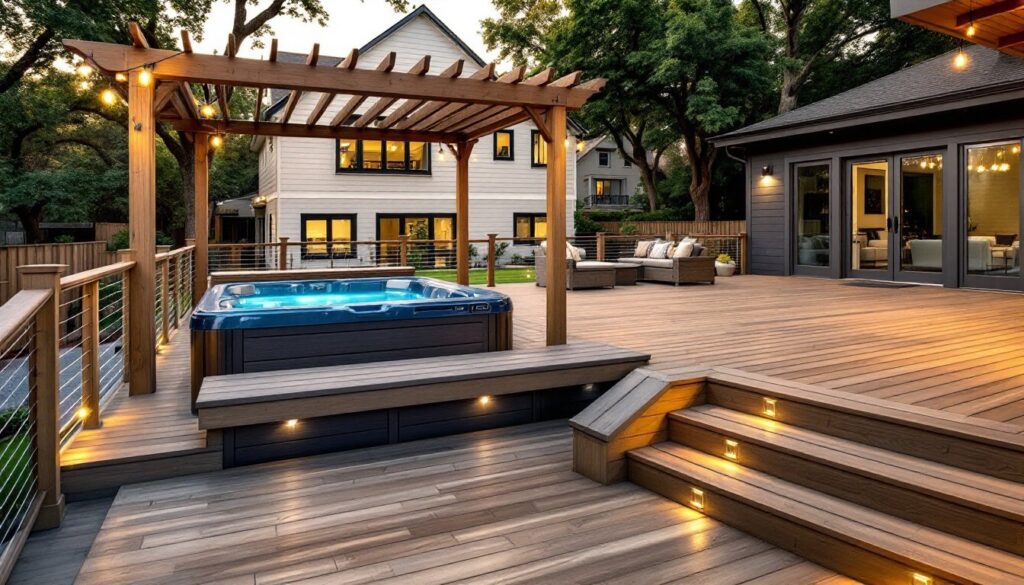

A hot tub without a proper deck feels unfinished, like a great sofa in an empty room. A well-designed deck transforms a standalone spa into a functional outdoor living space that adds real property value and becomes the heart of backyard gatherings. Whether you’re building new or upgrading an existing installation, understanding structural requirements, material performance, and layout options will save you from costly mistakes. This guide walks through the planning, materials, and design strategies that deliver a safe, durable, and visually impressive hot tub deck.
Table of Contents
ToggleKey Takeaways
- A hot tub deck design must support 100 psf live load ratings in most jurisdictions since filled tubs weigh 3,000-5,000 pounds, requiring structural reinforcement and engineered plans.
- Composite decking with protective caps and textured surfaces offers superior moisture and chemical resistance compared to pressure-treated lumber, making it ideal for wet environments.
- Proper planning includes checking local codes, ensuring 24-inch equipment access clearance, confirming frost line footings for elevated designs, and arranging a clear delivery path for the spa shell.
- Ground-level hot tub deck designs are simpler and more affordable (40-60% less expensive than elevated options), while wraparound and corner layouts maximize usable space for seating and entertaining.
- Use hot-dipped galvanized or stainless-steel fasteners for all structural connections to prevent corrosion from hot tub chemistry, and always run electrical in GFCI-protected conduit with licensed electrician oversight.
- Smart features like built-in benches with storage, privacy screens, low-voltage LED lighting, and non-slip rugs transform a basic platform into a resort-style outdoor living space that adds property value.
Why Your Hot Tub Deck Design Matters
A hot tub deck isn’t just a visual upgrade, it’s a structural and functional necessity. Most tubs weigh between 3,000 and 5,000 pounds when filled with water and occupied, so the deck must handle concentrated loads that far exceed typical deck loads of 40-50 pounds per square foot (psf). Many jurisdictions require decks supporting hot tubs to meet 100 psf live load ratings, and some areas mandate engineered plans and inspections.
Beyond structure, the deck controls access, water drainage, and user safety. A poorly planned deck creates tripping hazards, retains moisture against siding or framing, and complicates maintenance access to equipment panels and plumbing. Good design integrates steps, railings, and skirt panels that allow airflow while keeping debris out. It also considers wet foot traffic, smooth composite or fine-sawn lumber becomes slippery when wet, so material choice impacts safety directly.
Finally, the deck defines how the space functions. A cramped 8×8 platform offers little more than entry and exit. Extending the deck to 12×16 or larger allows seating, a drink ledge, storage benches, and space for towels and robes. That extra square footage turns a solitary soak into a social space.
Essential Planning Considerations Before You Build
Start with a site assessment. Hot tubs need a stable, compacted base, never place one on soft ground, soil subject to frost heave, or an existing deck not rated for the load. If integrating a tub into an elevated deck, consult the original plans or hire a structural engineer. Retrofitting often requires sistering joists, adding posts, or pouring additional footings. Even ground-level installations need a 4- to 6-inch gravel base topped with pavers or a reinforced concrete pad.
Check local building codes early. Most municipalities classify hot tub decks as accessory structures requiring permits, especially if the deck exceeds 200 square feet or sits more than 30 inches above grade. Setback requirements, railing height (typically 36 inches minimum), and electrical codes (GFCI-protected circuits, conduit routing) vary by jurisdiction. Electrical work for a 240V hot tub circuit almost always requires a licensed electrician and inspection.
Access and clearance matter more than most homeowners expect. Leave at least 24 inches on all sides for equipment access, filter cleaning, and shell maintenance. Plan the deck layout so the equipment panel isn’t blocked by stairs or railings. And consider delivery, spa shells are large and heavy: you’ll need a clear path from the street to the site, often requiring gate removal or crane access.
Choosing the Right Materials for Your Hot Tub Deck
Material selection balances durability, traction, and resistance to moisture and chemicals. Pressure-treated lumber remains the most common framing choice, rated for ground contact (.60 retention) for posts and beams. For decking surfaces, PT lumber is budget-friendly but requires annual sealing and can splinter. Cedar and redwood offer natural rot resistance and a premium look but cost significantly more and still need regular sealing to prevent graying.
Composite decking has become a popular upgrade for hot tub surrounds. Brands with protective caps resist mold, staining, and fading better than first-generation composites. But, not all composites handle heat well, dark colors can become uncomfortably hot in direct sun, and cheaper hollow-core boards may sag under point loads. Look for solid-core or capped polymer products rated for high-traffic wet areas. Grooved or embossed surfaces provide better traction than smooth finishes when wet.
Concrete pavers and natural stone work well for ground-level installations. A dry-laid paver patio over compacted gravel and sand allows easy releveling if settling occurs. Pavers also drain faster than solid decking and don’t retain heat the way dark composites can. Porcelain pavers and textured concrete offer slip resistance, though grout joints need periodic re-sanding.
For structural framing under elevated decks, galvanized or stainless-steel fasteners are non-negotiable. Hot tub chemistry, chlorine, bromine, and pH fluctuations, accelerates corrosion. Standard galvanized nails or screws can fail within a few years. Use hot-dipped galvanized joist hangers, lag bolts, and carriage bolts, or upgrade to stainless where budget allows. Advanced builders exploring complex framing scenarios often double-joist under tub footprints and use through-bolted ledger connections.
Popular Hot Tub Deck Layout Ideas
Layout depends on lot topography, tub placement, and how the space will be used. Corner placements are efficient, two sides of the tub nest against deck railings, freeing up the opposite corner for seating or a pergola. This works especially well on smaller lots where maximizing usable deck area is critical.
Wraparound decks suit homes with walkout basements or split-level designs. The deck can step down in tiers, with the hot tub on the upper level and lounge seating or dining on the lower. This creates visual interest and separates wet zones from dry entertaining areas.
Freestanding island decks place the hot tub at the center of a raised platform surrounded by built-in benches or planters. This works for larger yards where the deck becomes a destination rather than an extension of the house. Island layouts also simplify electrical and plumbing runs if the tub sits away from the home’s exterior wall.
Homeowners seeking creative design inspiration for deck layouts often find that integrating landscaping, lighting, and privacy screens transforms a simple platform into a resort-style retreat.
Elevated vs. Ground-Level Designs
Elevated decks make sense when the home’s main living area is above grade or when the yard slopes. They offer dramatic views and keep the tub level with interior rooms for easy access. But they require engineered footings, typically 12-inch diameter concrete piers extending below frost line, and beefed-up framing. Joists under a hot tub are often doubled or tripled, spaced at 12 inches on center instead of the standard 16. Blocking between joists prevents twisting and distributes weight.
Elevated designs also need code-compliant railings (36-42 inches high, balusters spaced no more than 4 inches apart) and stairs with proper rise/run ratios. Budget for increased material and labor costs, elevated decks typically run 40-60% more than ground-level builds.
Ground-level decks are simpler and often don’t trigger the same permit scrutiny, especially if kept under 200 square feet and less than 30 inches high. They’re easier to DIY, require less lumber, and simplify tub delivery and installation. The trade-off is limited elevation change for drainage and fewer sightline benefits. Ground-level designs work best on flat lots with good natural drainage. For wet climates or clay soils, consider a slight slope away from the tub and integrate deck drains or French drains to prevent standing water.
Enhancing Your Hot Tub Deck with Smart Features and Accessories
Once the structure is sound, thoughtful add-ons turn a basic deck into a year-round retreat. Built-in benches with hinged lids provide dry storage for towels, chemicals, and toys while doubling as seating. Size them at 18 inches deep and 17-18 inches high for comfortable sitting. Line the interior with cedar or marine-grade plywood to resist moisture.
Privacy screens and pergolas define the space and provide shade. Vertical slatted screens (spaced 2-4 inches apart) allow airflow while blocking sightlines. Lattice panels work but can look dated, consider horizontal slat fencing, corrugated metal panels, or living walls with climbing vines on galvanized wire mesh. Pergolas offer partial shade and support string lights, outdoor curtains, or retractable canopies. Size beams at 2×8 or larger and anchor posts with galvanized post bases on concrete footings.
Lighting is essential for safety and ambiance. Install low-voltage LED step lights on stair risers and post caps. Pathway lights guide wet feet from tub to towel bench. For mood lighting, use dimmable LED strips under railings or bench edges, waterproof IP65-rated strips handle splashing. Always run electrical in schedule 40 PVC conduit and use GFCI-protected circuits. Many DIYers comfortable with basic electrical tasks can handle low-voltage wiring, but 120V and 240V circuits should be left to licensed electricians or informed hobbyists following detailed repair tutorials and local NEC codes.
Integrated storage keeps clutter off the deck surface. Recessed cubbies between joists hold spa chemicals, test strips, and brushes. Outdoor-rated cabinets (poly or stainless steel) store robes and slippers. For colder climates, add a towel warmer cabinet with a low-wattage heating element, wet towels in January are miserable.
Non-slip surfaces deserve a second mention. Even with textured decking, outdoor rugs with drainage backing add a layer of safety and comfort. Avoid loop-pile styles that trap water and mildew: choose flat-weave polypropylene rugs that rinse clean with a hose.
Conclusion
A hot tub deck done right pays dividends in safety, usability, and backyard enjoyment for years. Invest time in planning structural support, navigating permits, and selecting materials suited to moisture and chemical exposure. Whether building an elevated wraparound or a simple ground-level pad, attention to framing details, drainage, and smart features ensures the space holds up to heavy use and harsh weather. The result is more than a place to park a spa, it’s an outdoor room that extends living space and elevates how homeowners use their yards.