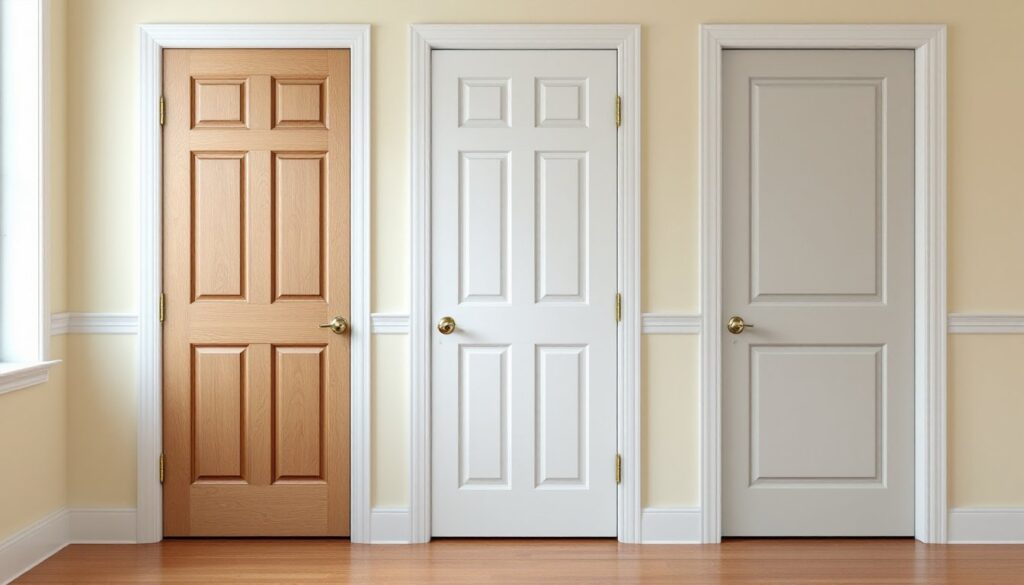

Interior doors do more than just separate rooms, they set the architectural tone for your entire home. Whether you’re replacing worn-out hollow-cores during a renovation or selecting doors for new construction, understanding panel styles helps you make choices that balance aesthetics, budget, and functionality. Panel configuration affects not just appearance but also door weight, structural integrity, and compatibility with your home’s existing trim and casing. This guide breaks down the most common interior door panel styles, from traditional raised panels to sleek contemporary slabs, so you can choose designs that fit your space and skill level.
Key Takeaways
- Interior door panel styles—ranging from traditional raised panels to modern flush doors—directly impact your home’s aesthetic, functionality, and overall architectural character.
- Raised panel doors create a formal, three-dimensional look and work best with substantial trim, while Shaker (flat panel) doors offer a cleaner appearance and are easier to paint for DIY projects.
- Hollow-core flush doors are budget-friendly ($30–$80) but lack sound dampening, whereas solid-core versions ($100–$250) reduce noise by 10–15 decibels and suit primary bedrooms and home offices.
- French panel doors with glass lites require extra weight-bearing support (three hinges minimum) and tempered glass in high-traffic areas for safety compliance.
- Choosing the right interior door panel style requires matching your home’s architecture, existing trim profile, and skill level—consistency across sight lines prevents a disjointed appearance.
- Proper installation prep, including careful shimming, square checking, and precise hinge mortising, separates professional-looking doors from builder-grade results.
What Are Door Panels and Why Do They Matter?
Door panels are the flat or shaped sections held within a door’s frame, which consists of vertical stiles and horizontal rails. In traditional stile-and-rail construction, the panels float within grooves cut into the frame, allowing the wood to expand and contract with humidity changes without warping or cracking the door. This floating panel system is why solid wood panel doors remain stable across seasons.
Panels affect both aesthetics and structural performance. Raised panels add depth and shadow lines, creating a formal, traditional look. Flat panels sit flush or nearly flush with the frame, lending a cleaner, more modern appearance. The number of panels also varies, common configurations include two-panel, four-panel, five-panel, and six-panel doors, each offering different visual rhythms.
Door panel style impacts installation and finishing too. Raised panel doors require more prep and paint due to their contours, while flat panel doors accept paint and stain more uniformly. If you’re tackling a DIY door replacement, consider that pre-hung units (door already mounted in a frame with hinges) simplify installation but limit customization, whereas slab doors (just the door itself) let you match existing jambs but require precise hinge mortising and trimming.
Classic Raised Panel Doors
Raised panel doors feature panels with a beveled or curved profile that projects outward from the frame, creating a three-dimensional effect. This style dominated American residential construction from the colonial era through the mid-20th century and remains the default “traditional” door in many builder-grade homes.
Most raised panel doors use a six-panel layout: two panels across and three down. The panels are typically made from solid wood (pine, oak, maple) or MDF (medium-density fiberboard) with a molded profile. Solid wood versions cost more ($150–$400 per slab depending on species and grade) but accept stain beautifully and can be repaired if dinged. MDF versions ($80–$200) are more stable in humid climates and come pre-primed, making them easier to paint.
When installing raised panel doors, pay attention to reveal, the gap between the door edge and the jamb. Standard reveal is ⅛ inch on the top and sides, ½ inch to ¾ inch at the bottom to clear flooring. Because raised panels add visual weight, they pair best with substantial casing and baseboard (at least 3¼-inch colonial or craftsman-style trim).
Safety note: MDF dust is fine and irritating. Always wear a dust mask or respirator (N95 minimum) and eye protection when cutting or sanding MDF doors.
Modern Flat Panel (Shaker) Doors
Flat panel doors, often called Shaker doors after the minimalist furniture style, feature recessed flat panels set within a simple stile-and-rail frame. The panels sit slightly below the frame surface, creating subtle shadow lines without the ornate contours of raised panels.
Shaker doors typically come in five-panel or single-panel configurations. The five-panel layout (one wide top rail, four smaller panels below) is the most common and works in both traditional and transitional interiors. Single-panel designs push further into modern territory and suit contemporary or Scandinavian-inspired homes.
These doors are a favorite among DIYers and professional remodelers because they’re easier to paint than raised panel doors, fewer crevices mean faster prep and fewer coats. Paint coverage averages 350–400 square feet per gallon for a standard interior door (about 21 square feet of surface area per side on a standard 1⅜-inch × 80-inch × 30-inch door), so one quart typically handles two to three doors with two coats.
Shaker doors pair well with both painted and stained finishes. If staining, choose tight-grain hardwoods like maple or cherry for a uniform appearance, since the flat panels highlight grain patterns more than raised profiles do. Expect to pay $120–$300 per slab for solid wood or engineered wood composite versions.
Tool tip: A random orbital sander (5-inch pad, 220-grit) speeds up surface prep on flat panels. For intricate inside corners where the panel meets the frame, use a detail sander or fold sandpaper over a putty knife edge.
Elegant French Panel Doors
French panel doors incorporate glass lites (panes) within the panel openings, allowing light to pass between rooms while maintaining some visual separation. True divided-lite French doors feature individual glass panes separated by muntins (thin wooden bars), though most modern versions use a single pane with applied or simulated muntins for easier cleaning.
Common configurations include ten-lite (two columns of five panes each) and fifteen-lite (three columns of five) designs. The glass can be clear, frosted, seeded, or textured depending on privacy needs. For bathrooms or home offices, frosted or reeded glass provides light transmission while obscuring views.
French doors are heavier than solid panel doors due to the glass weight, a standard ten-lite door can weigh 60–80 pounds versus 40–50 pounds for a solid wood panel door. This extra weight requires three hinges instead of two (standard placement at 7 inches from the top, 11 inches from the bottom, and centered) and sometimes ball-bearing hinges for smoother operation.
Installation requires extra care. The glass makes these doors more fragile during handling, and you’ll need to shim the jamb carefully to prevent racking (twisting) that can crack panes. Always check for square by measuring diagonals, they should match within ⅛ inch.
Safety warning: If installing French doors in high-traffic areas or homes with children, consider tempered glass, which shatters into small, less dangerous pieces. Building codes (check your local IRC provisions) may require tempered glass in doors or sidelites within 24 inches of a door edge.
Contemporary Flush and Slab Doors
Flush doors have completely flat faces with no raised or recessed panels, just a smooth, uninterrupted surface. Most modern flush doors use hollow-core construction: two thin hardboard or MDF skins bonded to a honeycomb cardboard or particleboard core with solid wood blocks around the edges for hinge and latch mounting.
Hollow-core flush doors are the most budget-friendly option ($30–$80 per slab) and weigh only 25–35 pounds, making them easy for one person to hang. They’re fine for closets, secondary bedrooms, and rental properties, but they offer minimal sound dampening and dent easily. They’re also not rated for exterior use or high-moisture areas.
Solid-core flush doors use particleboard, MDF, or engineered wood composite cores, making them much heavier (60–90 pounds) and substantially more sound-resistant. They cost more ($100–$250) but are worth it for primary bedrooms, bathrooms, and home offices where noise control matters. According to building science and construction standards, solid-core doors can reduce sound transmission by 10–15 decibels compared to hollow-core.
Flush doors accept paint exceptionally well since there are no contours to trap brush marks. Use a high-density foam roller (¼-inch nap) for the flattest finish, and always paint both sides plus all edges to prevent moisture-related warping.
Pro tip: Hollow-core doors require careful hinge installation. Drill pilot holes precisely within the edge blocks, if you miss and screw into the cardboard core, the hinge won’t hold. Measure ⅞ inch from the door edge to the hinge center line as a starting reference.
Choosing the Right Panel Style for Your Home
Matching door style to your home’s architecture keeps the interior visually coherent. Craftsman and traditional homes call for raised or flat panel doors with substantial trim. Mid-century modern and ranch-style homes suit flush or simple flat panel doors with minimal casing. Farmhouse and transitional styles work well with Shaker doors painted in muted whites or grays.
Consider your existing trim profile. If you have 3½-inch or wider baseboards and door casings with rosettes or backbands, raised panel doors balance the visual weight. Homes with 2¼-inch colonial or ranch casing look better with flat panel or flush doors that don’t compete for attention.
Door height matters too. Standard interior doors are 80 inches tall, but many newer homes and renovations featured in design media use 8-foot (96-inch) doors for a more dramatic, modern look. Taller doors require taller jambs and may need custom milling or ordering, adding $100–$300 per opening to material costs.
Budget and skill level factor in. Hanging a pre-hung door is a half-day job for a confident DIYer with basic carpentry skills, you need a level, shims, a drill, and a handsaw or multi-tool. Hanging a slab door (fitting it to an existing jamb) requires cutting it to size, routing or chiseling hinge mortises, and drilling for the latch, figure a full day per door if it’s your first time, and expect some trial and error.
If you’re replacing multiple doors, consistency is key. Mixing styles within sight lines looks unintentional. Stick with one panel style per floor or at least per zone (public spaces versus private bedrooms).
Permit note: Replacing interior doors like-for-like rarely requires permits, but if you’re changing door sizes, moving walls, or altering fire-rated assemblies (such as doors between a house and attached garage), check with your local building department.
Conclusion
Interior door panel styles shape your home’s character more than most people realize. Whether you lean toward the formality of raised panels, the clean lines of Shaker doors, or the minimalism of flush slabs, choose a style that aligns with your home’s architecture and your own skill level. Pay attention to construction quality, budget for proper tools and materials, and don’t skip the prep work, sanding, priming, and careful installation make the difference between a door that looks builder-grade and one that elevates the whole room.