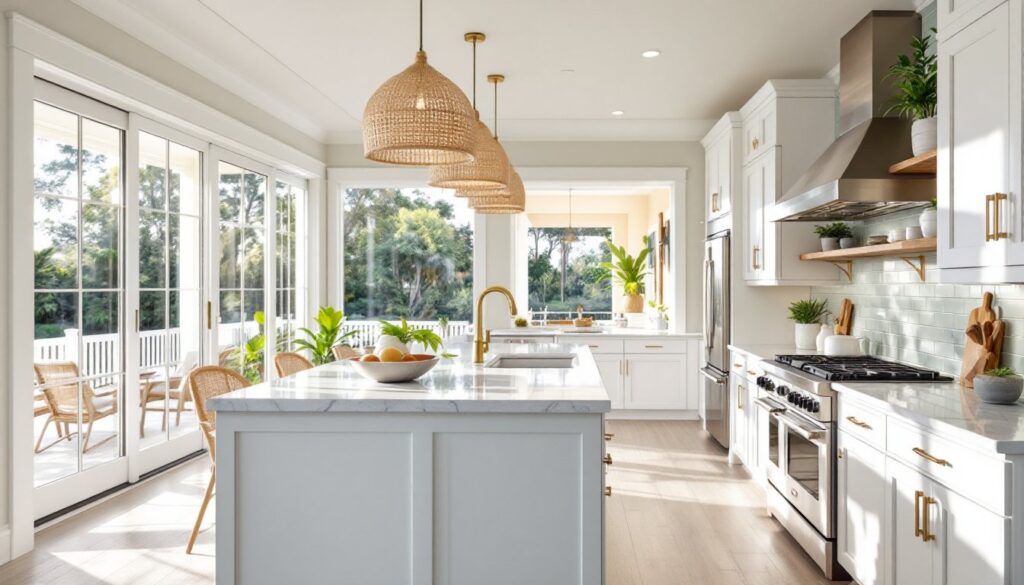

Tampa kitchens face unique demands that mainland designs often ignore. Between the relentless Gulf Coast humidity, sudden afternoon storms, and a year-round indoor-outdoor lifestyle, what works in Chicago or Denver won’t hold up here. This guide walks through the essential design choices, material selections, and budgeting strategies that account for Tampa’s subtropical reality, whether you’re planning a full gut renovation or a targeted update that’ll last through hurricane season and beyond.
Table of Contents
ToggleKey Takeaways
- Tampa’s 74% average humidity and tropical climate require moisture-resistant materials like plywood cabinets, quartz countertops, and epoxy grout to prevent swelling, mold, and deterioration in kitchen design.
- Install a ducted range hood with minimum 400 CFM ventilation vented to the exterior, and pair it with a whole-house dehumidifier to keep indoor humidity below 55% and combat moisture-related kitchen damage.
- Coastal and tropical kitchen design styles suit Tampa homes best, featuring whites, soft blues, weathered finishes, and water-resistant materials like sealed pine, porcelain tile, and matte black hardware.
- A mid-range kitchen design renovation in Tampa costs $30,000–$55,000 ($150–$275 per square foot), with cabinets consuming 35–40% of the budget; set aside 15–20% contingency for humidity-related structural surprises.
- Choose kitchen flooring in luxury vinyl plank or porcelain tile over hardwood, and prioritize full-extension pull-out drawers and seamless large-format backsplashes to minimize grout lines and mold risk.
- Avoid particleboard cabinets, marble countertops, hardwood flooring, and reclaimed materials in Tampa kitchens; instead spec solid brass or stainless steel hardware and view finish samples under your home’s natural light before purchasing.
Why Tampa’s Climate and Lifestyle Shape Kitchen Design Choices
Tampa’s climate isn’t just a weather pattern, it’s a design constraint. Humidity levels average 74% year-round, which means moisture-sensitive materials degrade faster here than in arid or temperate zones. Cabinet boxes made from particleboard or MDF without proper sealing will swell at the edges within a few years. Grout lines in backsplashes become mold magnets without adequate ventilation.
The indoor-outdoor flow matters more in Tampa than in most metros. Homeowners entertain on lanais, run AC units nine months a year, and need kitchens that transition smoothly to outdoor cooking zones. That means considering sightlines to pool areas, selecting finishes that tolerate sun glare through sliding glass doors, and planning for extra refrigeration or prep space near patio access points.
Air circulation is critical. Many older Tampa homes lack range hoods vented to the exterior, builder-grade recirculating models just push steam back into the room. Retrofitting a ducted hood (minimum 400 CFM for a standard 30-inch range) requires cutting through exterior walls or roof sheathing, but it’s one of the most effective humidity-control upgrades. If structural constraints prevent exterior venting, at least spec a high-capacity recirculating hood with charcoal filters changed quarterly.
Flood zones also influence design decisions. Homes in FEMA-designated zones may require elevated electrical outlets, waterproof lower cabinetry, or quick-disconnect plumbing for appliances. Even outside formal flood zones, ground-level condos and older ranch homes near tidal creeks benefit from water-resistant base cabinets and sealed concrete or luxury vinyl plank (LVP) flooring instead of hardwood.
Popular Kitchen Design Styles for Tampa Homes
Coastal and Tropical-Inspired Kitchens
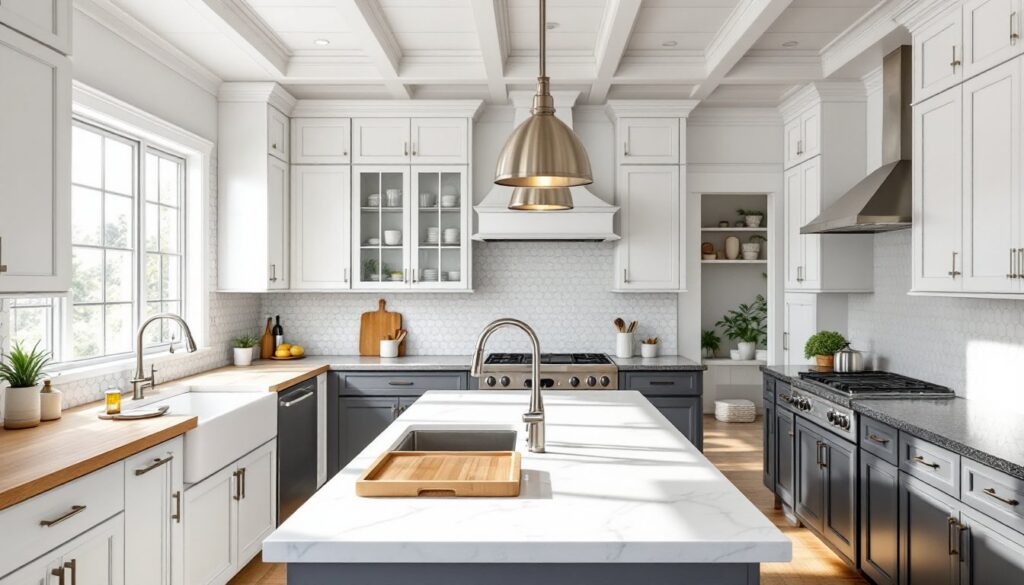
Coastal doesn’t mean seashell drawer pulls and driftwood signage. In practice, it’s a palette of whites, soft blues, and weathered grays paired with materials that reference waterfront living without theme-park kitsch. Shaker-style cabinets in Benjamin Moore’s White Dove or Sherwin-Williams Sea Salt anchor the look. Open shelving, using 1×10 rough-sawn pine or reclaimed heart pine, adds texture without upper-cabinet bulk.
Countertops in white quartz (Caesarstone Statuario Nuvo or Cambria Brittanica) resist staining better than marble and handle the acidic residue from limes and citrus that’s common in Florida kitchens. For backsplashes, 3×6 subway tile in a pale aqua or sea-glass green provides visual interest with grout lines narrow enough (1/16 inch with epoxy grout) to minimize mold risk.
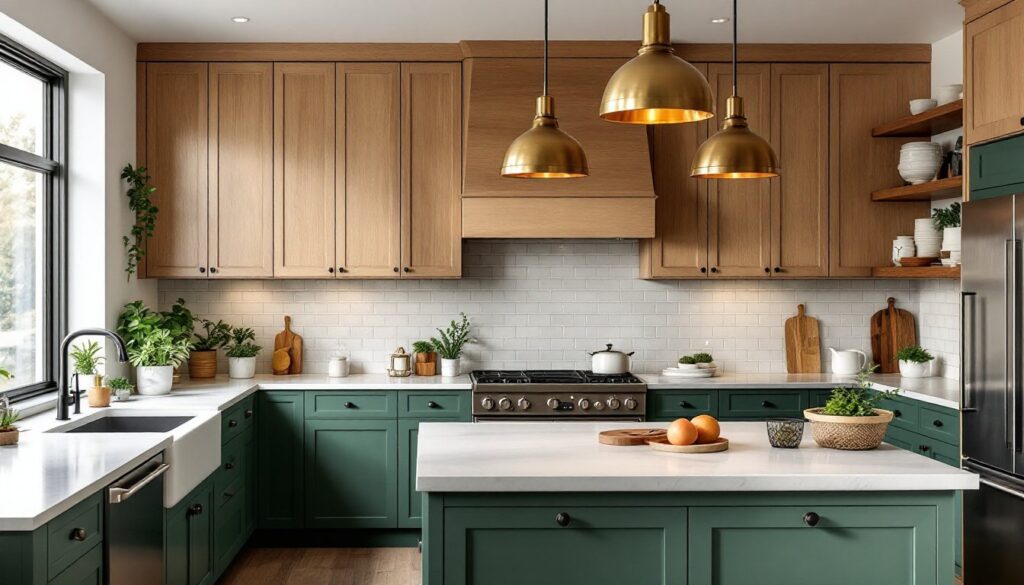
Tropical takes include natural wood tones, teak, bamboo, or ipe, used sparingly as accents on floating shelves, range hoods, or island bases. Pair them with matte black or brushed brass hardware and fixtures. Pendant lights in woven rattan or raffia (sealed with polyurethane for moisture resistance) bring in organic texture. Plants aren’t optional in tropical kitchen layouts: pothos, philodendron, or snake plants thrive in bright, humid environments and soften hard surfaces.
Modern Farmhouse and Transitional Designs
Modern farmhouse in Tampa skews lighter and less rustic than its Midwest counterpart. Skip the reclaimed barn beams, they harbor termites and don’t suit Florida’s pest pressures. Instead, use painted shiplap on a single accent wall (sealed with semi-gloss for easy cleaning), apron-front sinks in white fireclay, and matte black or oil-rubbed bronze fixtures.
Cabinets should be full-overlay frameless or inset if budget allows. Paint them in Sherwin-Williams Alabaster or Benjamin Moore Hale Navy for base cabinets with white uppers. Butcher-block countertops look appealing but require monthly oiling and don’t tolerate Tampa’s humidity well unless they’re edge-grain maple treated with water-resistant polyurethane.
Transitional designs blend Shaker door profiles with contemporary hardware and streamlined stone. Think slab-front upper cabinets in walnut veneer paired with white lower cabinets, or two-tone islands with a contrasting quartzite waterfall edge. Backsplashes in large-format porcelain slabs (6×12 feet) minimize grout lines and create a high-end, seamless look. This style suits both historic Seminole Heights bungalows and newer builds in Westchase or New Tampa.
Essential Features for Tampa Kitchen Designs
Ventilation ranks first. Beyond the range hood, consider a whole-house dehumidifier integrated with the HVAC system to keep indoor humidity below 55%. Kitchens generate moisture from cooking, dishwashers, and open containers: without active dehumidification, you’ll fight mildew on cabinet interiors and musty odors in pantries.
Lighting needs to account for both task work and Florida’s intense natural light. Recessed LED cans (4-inch or 6-inch, 3000K color temperature) should be placed every 4 feet over work zones. Under-cabinet LED strips eliminate shadows on countertops, choose models with a CRI (Color Rendering Index) above 90 so food colors appear accurate. Dimmer switches let you dial down brightness during evening entertaining.
Storage should prioritize pull-out drawers over fixed shelves. Deep base cabinets with full-extension soft-close glides (rated for 100 pounds) make accessing heavy stockpots or small appliances easier. Lazy Susans work well in corner cabinets, but tandem pull-out units maximize usable space better if the cabinet box is at least 33 inches wide.
A coffee or beverage station is standard in Tampa kitchens. Dedicate a 24-inch base cabinet near the sink for a built-in espresso machine or a countertop setup with a water line and dedicated 20-amp circuit. Include a pull-out drawer for pods, filters, and syrups. If space permits, a small wine fridge (18-bottle capacity, dual-zone) fits under the counter near the dining area, essential for reds that can’t survive a Tampa pantry.
Appliance integration matters in open-plan homes. Panel-ready dishwashers and refrigerators blend with cabinetry for a seamless look. If going stainless, choose fingerprint-resistant finishes (GE’s Slate, Samsung’s Black Stainless, or Bosch’s 800 Series). In humid climates, bottom-freezer or French-door refrigerators handle condensation better than top-freezer models.
Choosing Materials That Withstand Tampa’s Humidity
Cabinetry should be plywood box construction, specifically ¾-inch purebond or ApplePly, with dovetail or doweled joinery. Avoid particleboard cores, even if they’re labeled “moisture-resistant.” They’ll expand at the seams. Face frames and doors can be solid wood (maple, hickory, or red oak) or MDF if factory-painted with conversion varnish or catalyzed lacquer, which seals better than standard latex paint.
For countertops, quartz leads in durability and moisture resistance. It’s nonporous, doesn’t require sealing, and handles heat up to 300°F (use trivets anyway). Granite works if sealed annually with a penetrating sealer like StoneTech BulletProof: black or dark-veined varieties hide minor etching better than white. Avoid marble unless it’s honed Carrara in a low-use wet bar, it etches on contact with citrus.
Backsplashes in porcelain or ceramic tile outlast natural stone in Tampa. Glazed finishes resist staining and wipe clean. Use epoxy grout (Laticrete SpectraLOCK or similar) instead of traditional cement grout, it’s mold-proof and doesn’t need sealing. Grout lines should be ⅛ inch or narrower: wider joints collect grime.
Flooring needs to be waterproof. Luxury vinyl plank (LVP) in a rigid core (6-8 mm thick) handles spills, humidity swings, and foot traffic. Brands like COREtec or LifeProof offer realistic wood-look textures. Porcelain tile (12×24 or larger planks in a wood-grain pattern) provides even better durability. Real hardwood is risky unless it’s engineered with a waterproof core and acclimated to Tampa humidity for two weeks before installation. Even then, expect seasonal gaps.
Hardware and fixtures in solid brass, stainless steel, or bronze hold up better than zinc alloy. Coastal air accelerates corrosion on cheaper finishes. If the home is within two miles of the bay, apply a thin coat of Renaissance Wax to exposed metal twice a year to prevent pitting. This applies to cabinet pulls, faucet bases, and light fixtures.
Budget Planning for Your Tampa Kitchen Renovation
A mid-range Tampa kitchen remodel (200 square feet, new cabinets, countertops, appliances, and flooring) typically runs $30,000 to $55,000 as of 2026. That breaks down to roughly $150–$275 per square foot, though costs spike in historic neighborhoods where structural surprises are common or in waterfront condos with condo-association permit requirements.
Cabinets consume 35–40% of the budget. Semi-custom plywood cabinets from local Tampa suppliers average $8,000–$15,000 for a standard 10×12 kitchen with an island. Expect 6–10 weeks lead time. Big-box stock cabinets (Home Depot, Lowe’s) cut costs to $4,000–$7,000 but offer limited sizing and fewer finish options.
Countertops in quartz run $60–$100 per square foot installed, including cutouts and edge profiles. Granite ranges $45–$80 per square foot. Budget an extra $200–$400 for undermount sink cutouts and faucet drilling. If the layout includes an island with seating, a waterfall edge adds $600–$1,200 depending on slab thickness.
Appliances (refrigerator, range, dishwasher, microwave) start around $3,500 for builder-grade stainless (GE, Whirlpool) and climb to $10,000+ for pro-style ranges and panel-ready units. Don’t skimp on the range hood, a ducted 400-CFM hood costs $400–$800 plus $500–$1,200 in ductwork and exterior cap installation if not already present.
Flooring in LVP costs $4–$7 per square foot installed: porcelain tile runs $8–$14 per square foot with labor. Add 10% overage for cuts and pattern matching.
Labor for a general contractor managing the full project ranges $50–$85 per hour in Tampa, with total labor hitting $8,000–$18,000 depending on scope. Pull permits for any work involving plumbing relocation, electrical panel upgrades, or structural changes (removing a load-bearing wall requires an engineer’s stamp and IRC-compliant beam installation). Permit fees in Hillsborough County average $500–$1,500.
Contingency: Set aside 15–20% of the total budget for unknowns, rotted subfloor from old leaks, outdated wiring that needs upgrading to current NEC standards, or mold remediation behind old tile. Older Tampa homes (pre-1980) often hide aluminum wiring or undersized breaker panels that require costly updates once walls are open.
To control costs, keep the existing layout. Moving a sink or range means rerouting plumbing and gas lines, which adds $1,500–$3,000 per fixture. Refinishing existing cabinets (stripping, sanding, and repainting with conversion varnish) costs $3,500–$6,500, about half the price of new semi-custom boxes, and works well if the cabinet frames are solid and functional. Painting is a weekend DIY project if you have the patience for proper prep: TSP wash, deglosser, bonding primer, and two topcoats.
For design planning and material selection, platforms offering curated remodel galleries help narrow choices before visiting showrooms. Bring finish samples home and view them under your kitchen’s actual lighting, colors shift dramatically between showroom fluorescents and Tampa’s natural light.