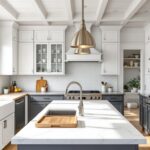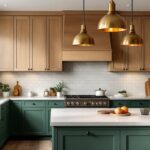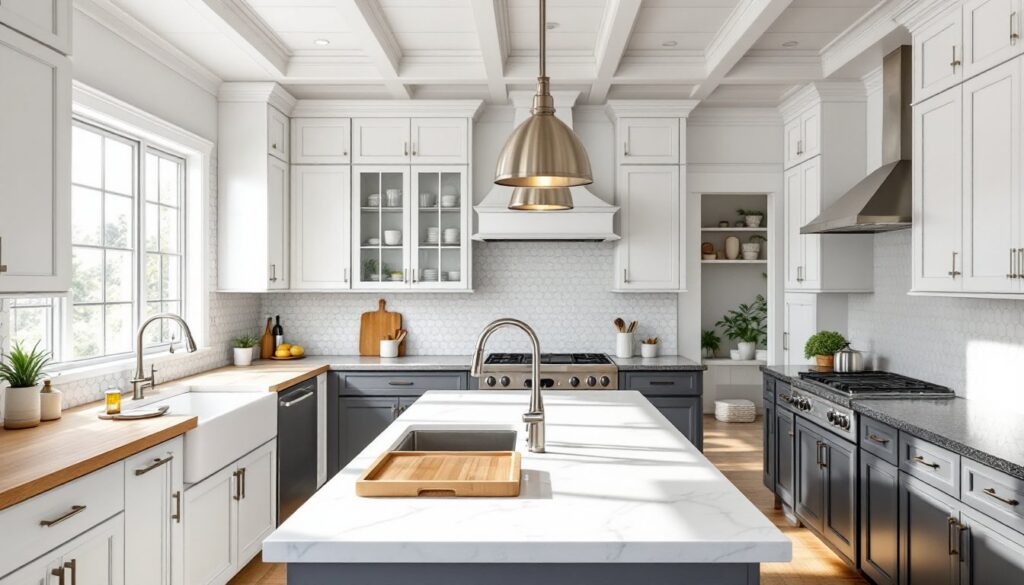

The L-shaped kitchen has earned its reputation as one of the most versatile and functional layouts for a reason, it adapts to nearly any floor plan, from compact apartments to sprawling suburban homes. Two perpendicular runs of cabinetry and countertop create a natural work zone that keeps everything within arm’s reach without wasting square footage. Whether you’re planning a full remodel or rethinking your existing layout, understanding the mechanics and potential of an L-shaped design can transform how you cook, entertain, and move through the space. This guide walks through the nuts and bolts of L-shaped kitchens, from work triangle optimization to corner storage hacks, plus the styles and pitfalls worth knowing before you commit.
Table of Contents
ToggleKey Takeaways
- L-shaped kitchen design offers spatial efficiency and flexibility, working effectively in both small 10×10-foot spaces and larger footprints while naturally inviting islands, peninsulas, or dining areas.
- The work triangle—connecting sink, range, and refrigerator—falls naturally into place with an L-shaped layout, keeping total leg travel under 26 feet for optimal workflow efficiency.
- Strategic corner solutions like lazy Susan cabinets, pull-out organizers, and diagonal corner sinks transform the 90-degree corner from dead space into functional storage and workspace.
- Current 2026 trends favor minimalist slab-door cabinets, two-tone color schemes, waterfall-edge islands, and smart appliance integration that complement the geometric simplicity of L-shaped design.
- Avoid common pitfalls by maintaining proper landing space (15+ inches), planning multiple electrical circuits, ensuring full-length under-cabinet lighting on both legs, and using scaled drawings before installation.
- Proper cabinet spacing with at least 3-inch fillers between perpendicular runs and careful appliance placement relative to corners prevents workflow disruption and ensures doors and drawers open fully.
What Is an L-Shaped Kitchen and Why Is It So Popular?
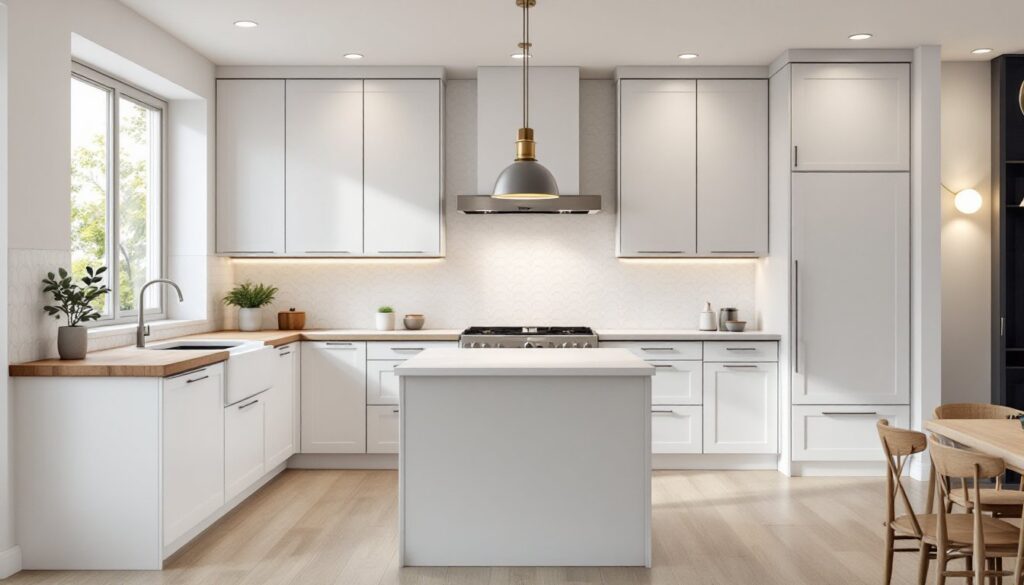
An L-shaped kitchen consists of two perpendicular walls of cabinetry and countertop that form a 90-degree angle, creating an open layout on the remaining sides. This configuration typically places the sink, range, and refrigerator along the two legs of the “L,” establishing a compact work triangle without the corridor traffic flow of a galley or the sprawl of a U-shaped design.
The popularity stems from spatial efficiency and flexibility. L-shaped layouts work in both small and large footprints, tuck one into a 10×10-foot space or stretch the legs to 12 and 15 feet for a more generous prep zone. The open side naturally invites a dining table, island, or peninsula, making the kitchen feel less boxed-in than closed-plan alternatives.
From a code and workflow perspective, the L-shape minimizes cross-traffic. Since there’s no through-corridor, family members can move around the cook without bumping elbows. That open adjacency also suits modern open-concept floor plans, where the kitchen flows into a living or dining area without visual barriers.
Another draw is installation simplicity. Plumbing and electrical rough-ins concentrate along two walls, which often reduces labor and material costs compared to galley or island-heavy plans that require additional supply lines and drain venting across the room.
Key Benefits of L-Shaped Kitchen Layouts
Efficient use of corner real estate. Every kitchen has dead zones, but the L-shape centralizes them into a single 90-degree corner that you can address with lazy Susans, pull-out shelves, or diagonal cabinets. The rest of the perimeter stays accessible and productive.
Natural work triangle. The classic triangle, sink, range, cooktop, falls into place with minimal planning. For example, sink on one leg near the window, range on the perpendicular wall, refrigerator at the corner. Total leg travel stays under 26 feet, the recommended maximum for efficient movement.
Open floor integration. Because one or two sides remain open, L-shaped kitchens integrate seamlessly with dining nooks, breakfast bars, or islands. This is especially valuable in homes built or remodeled after 2010, when open-concept layouts became the norm in residential construction.
Scalability for islands and peninsulas. If square footage allows, dropping a 4×8-foot island opposite the L-leg adds prep surface, seating, and storage without blocking sight lines. Peninsulas extending from one leg can define zones in a great room while keeping the kitchen footprint tight.
Cost-effective cabinet runs. Two straight runs of cabinets are simpler to fabricate and install than U-shapes or complex angles. Stock cabinetry in standard widths (12″, 18″, 24″, 30″, 36″) fits cleanly along perpendicular walls, reducing custom millwork expenses.
Adaptable to challenging floor plans. Odd-shaped rooms, angled walls, or homes with load-bearing posts in awkward spots often accommodate an L-shape better than rigid galley or U-configurations. A designer can shift one leg shorter or longer to dodge obstructions.
Smart Design Strategies for L-Shaped Kitchens
Optimizing the Work Triangle
Place the sink along the longer leg, ideally under a window for natural light and ventilation. If plumbing already stubs out on an exterior wall, routing new drains and vents is simpler than crossing interior partition walls.
Position the range or cooktop on the perpendicular leg, at least 15 inches from the corner to allow counter landing space on both sides. The 2021 IRC recommends minimum 12-inch landing on one side and 15 inches on the other for safe pot handling. If you’re installing a gas range, confirm local code requirements for clearance to combustible surfaces, many jurisdictions mandate 6 inches or more.
Locate the refrigerator at the end of one leg, near the room entry if possible, so family members can grab snacks without crossing the active cook zone. A 36-inch-wide French-door unit needs 39 to 42 inches of rough opening width: account for that when planning cabinet widths.
Keep the sum of the three triangle legs between 15 and 26 feet. Shorter feels cramped: longer wastes steps. Measure from the center-front of each appliance, not wall to wall.
Corner Solutions and Storage Ideas
Lazy Susan cabinets (also called kidney or pie-cut) are the workhorse solution for 90-degree base corners. A two-tier rotating shelf system maximizes access to pots, small appliances, or dry goods. Expect to lose about 10 percent of the gross volume to the rotating mechanism and door clearance.
Diagonal corner sinks reclaim awkward geometry by centering the basin at the angle. This frees up linear counter on both legs but requires custom cabinetry and may complicate plumbing if the existing drain stub sits on one wall. Budget an extra $300 to $600 for the specialized base cabinet and sink.
Pull-out blind-corner organizers use a sliding shelf that swings out and forward, bringing back-wall items into reach. These units fit standard 36 or 42-inch corner bases and typically add $150 to $250 per cabinet over fixed shelves.
Open shelving or glass-front uppers in the corner reduce visual bulk and display dishware. Creative corner cabinetry solutions can turn dead space into design focal points when planned thoughtfully.
Appliance garages tucked into upper corners keep toasters, blenders, and coffee makers accessible but out of sight. Install a tambour door or lift-up panel: ensure the garage depth matches your counter depth (typically 24 to 25 inches for base, 12 to 15 inches for upper).
Popular L-Shaped Kitchen Styles and Trends for 2026
Minimalist slab-door cabinets dominate new builds and remodels. Flat-panel doors in matte white, warm gray, or natural walnut veneer create clean lines that suit the L-shape’s geometric simplicity. Pair with integrated pull handles or push-latch hardware to eliminate visual clutter.
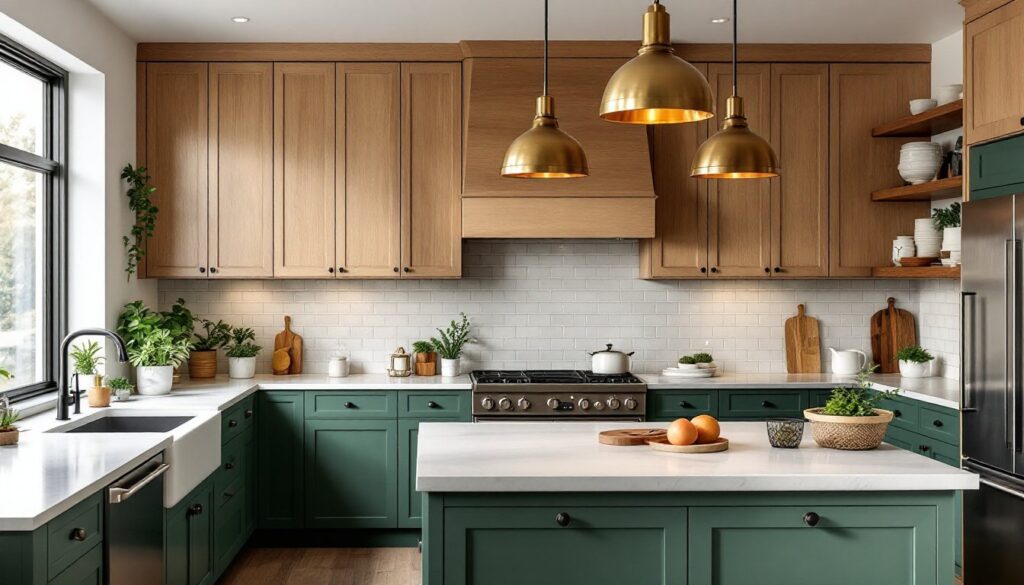
Two-tone cabinetry is holding strong into 2026. A common approach: darker lowers (navy, charcoal, forest green) on one leg, lighter uppers (white, cream, light oak) on both, or vice versa. This adds depth without requiring a full custom paint job, many manufacturers offer stock two-tone combinations.
Waterfall-edge islands opposite the L-leg extend quartz or porcelain slab down the sides for a sculptural look. The material cost jumps roughly 30 percent over a standard overhang, but the seamless edge suits contemporary and transitional styles.
Open shelving on one leg breaks up the mass of wall cabinets and showcases everyday dishes or glassware. Pair floating shelves with under-cabinet LED strips for task lighting and visual interest. Use 1×10 or 1×12 solid hardwood or plywood with concealed bracket systems rated for at least 50 pounds per linear foot.
Smart appliance integration is accelerating. Induction cooktops with built-in downdraft venting, panel-ready dishwashers, and refrigerators with Wi-Fi inventory tracking fit seamlessly into L-shaped runs. Modern appliance choices reflect both aesthetics and connectivity expectations in 2026 kitchens.
Textured backsplashes in zellige tile, 3D ceramic, or book-matched stone slabs add tactile contrast to flat cabinetry. Run the backsplash full-height on one leg or create a focal zone behind the range. Budget $15 to $45 per square foot installed, depending on material and pattern complexity.
Common Mistakes to Avoid When Designing Your L-Shaped Kitchen
Skimping on landing space. Builders and DIYers often push appliances tight to corners to save a few inches. The result: no room to set down a hot pot or unload groceries. Follow the 15/18-inch rule, at least 15 inches of counter on one side of a cooktop or sink, 18 inches preferred.
Ignoring the corner workflow. A 90-degree turn feels natural on paper but awkward in practice if the corner lands in the middle of your primary prep zone. Plan the longest continuous counter run, ideally 36 to 48 inches, on the leg where you’ll do most chopping and mixing. Place the corner near the sink or range, not dead-center in your work surface.
Underestimating cabinet depth conflicts. Standard base cabinets run 24 inches deep: wall cabinets 12 inches. When two runs meet at a corner, the face frames or door fronts can collide if not spaced correctly. Leave at least a 3-inch filler between perpendicular cabinets to ensure doors and drawers open fully. Some installers use a 6-inch filler and add a narrow pull-out spice rack.
Overlooking electrical and lighting. L-shapes need multiple circuits. The NEC requires at least two 20-amp small-appliance circuits for countertop receptacles, plus dedicated circuits for refrigerator, dishwasher, microwave, and disposal. Under-cabinet lighting should run the full length of both legs: a single overhead fixture leaves corners in shadow. Install LED tape or puck lights on separate switches for task and ambient control.
Choosing the wrong island size. A too-large island blocks the open side of the L and crimps walkways. Maintain at least 42 inches of clearance between island and base cabinets (48 inches if multiple cooks or wheelchair access is needed). For a 10×12-foot L-shaped kitchen, a 3×5-foot island is about the maximum before traffic flow suffers.
Forgetting ventilation planning. Range hoods require ducting to the exterior: the shortest, straightest run yields the best performance. If the range sits on an interior wall perpendicular to the exterior, you may need to run duct up through the ceiling and out the roof. Ductless recirculating hoods are a fallback but filter only grease and odor, they don’t remove heat or moisture. Check your local building codes for CFM minimums and makeup-air requirements if installing a hood rated above 400 CFM.
Neglecting material acclimation and prep. Cabinets delivered in winter need 48 hours in the install space to equalize moisture content, or doors may warp post-install. Countertop templating must happen after cabinets are leveled and secured: a 1/4-inch variation in base height translates to visible seams or overhangs in quartz or granite.
Rushing the layout without a scaled drawing. Graph paper or free design software (IKEA Kitchen Planner, SketchUp) prevents costly errors. Mark existing plumbing, electrical, windows, and structural elements before sketching cabinet runs. Measure twice, cut once applies to cabinetry orders, restocking fees and lead times can derail schedules and budgets.