
Kitchen cabinet doors set the visual tone for the entire room. They’re the first thing you notice when you walk in, and they cover more square footage than backsplashes, countertops, or floors combined. Whether you’re tackling a full remodel or just swapping doors for a refresh, the style, material, and finish you choose will dictate maintenance, durability, and resale value. This guide walks through the core door styles dominating 2026, material trade-offs, and finish trends that actually hold up under grease, moisture, and daily wear.
Table of Contents
ToggleKey Takeaways
- Kitchen door design accounts for 60–70% of a kitchen’s visible surface area, making it the single biggest design decision that impacts aesthetics, cleanliness, and resale value.
- Shaker doors with five-piece frame-and-panel construction offer timeless appeal and durability, while slab doors provide modern minimalism but require precise installation to hide misalignment.
- Solid hardwood delivers premium durability and repairability, but MDF and plywood veneer offer cost-effective alternatives with better stability—mix materials strategically to balance budget and visual impact.
- Warm whites with cream or greige undertones, along with navy and forest green accents on islands, dominate 2026 trends, while matte and satin finishes replace high-gloss polyurethane.
- Frame-and-panel doors handle humidity swings better than single-slab designs, reducing warping in humid climates—use European hinges rated for at least 15+ pounds per pair when installing heavier MDF doors.
- Textured finishes like wire-brushed wood and cerused oak hide fingerprints and damage while adding visual interest, and always apply at least three topcoats on cabinet doors for durability.
Why Kitchen Door Design Matters More Than You Think
Cabinet doors account for 60–70% of a kitchen’s visible surface area. That makes them the single biggest design decision in the room, not the island, not the appliances.
Beyond aesthetics, door style affects cleanability. Raised-panel doors with intricate profiles trap grease and crumbs. Flat-slab doors wipe down in seconds. If you cook daily, that difference adds up.
Doors also signal quality to future buyers. Solid wood doors with dovetailed frames read as premium. Thermofoil over particleboard reads as builder-grade. Appraisers and buyers notice, especially in competitive markets.
Finally, door construction impacts longevity. Five-piece frame-and-panel doors handle humidity swings better than single-slab MDF. They expand and contract at joints, not across the entire surface, which reduces warping in climates with seasonal humidity changes. If you live in the Southeast or Pacific Northwest, that construction detail matters.
Popular Kitchen Door Styles to Consider
Shaker Doors: Timeless Simplicity
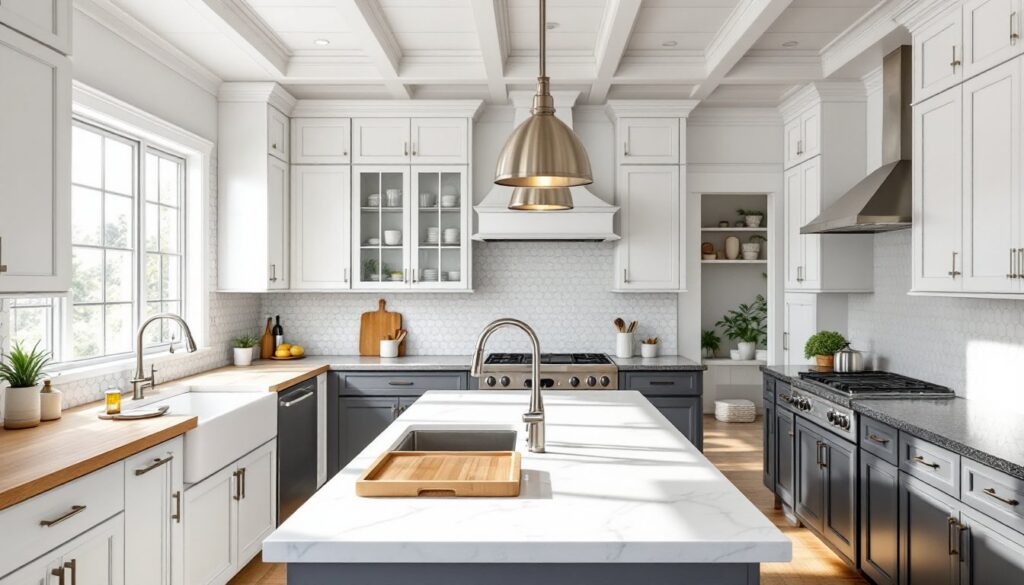
Shaker doors feature a five-piece construction: four rails forming a flat frame around a recessed center panel. The panel sits in a groove (a dado) cut into the inner edge of the frame, allowing wood movement without cracking.
This style works in traditional, transitional, and modern farmhouse kitchens. The clean lines don’t compete with bold backsplashes or statement lighting. Paint-grade maple or MDF Shaker doors run $15–$25 per square foot installed (mid-2026 pricing, varies by region). Stain-grade cherry or walnut pushes that to $35–$50.
Shaker doors hide dings well. The recessed panel shadows minor dents, unlike flat slabs where every nick shows. If you have young kids or high traffic, that’s a practical win.
One caution: avoid overly narrow rails (less than 2 inches). They look delicate and can crack near hinge screws, especially on heavy doors over 24 inches tall. Stick with 2¼- to 2½-inch rails for durability. Many cabinet styles balance proportion and strength at these dimensions.
Slab Doors: Modern Minimalism
Slab doors are single-piece panels with no frame or ornamentation. They’re the default in contemporary and Scandinavian-inspired kitchens, often paired with integrated pulls or push-to-open hardware.
Material choice defines the look. High-gloss acrylic slabs reflect light and make small kitchens feel larger, but fingerprints show immediately. Matte laminate hides smudges better. Veneer-core plywood slabs offer real wood grain at a lower cost than solid hardwood.
Edge detail matters. A square edge (90-degree corner) looks crisp but chips easily. A micro-bevel or eased edge (slightly rounded) is more forgiving and still reads as modern.
Slab doors require precise installation. Because there’s no frame to hide gaps, any misalignment between doors is obvious. If your cabinet boxes aren’t dead level, you’ll see it. Budget extra time for shimming and adjustment, or hire a pro if you’re not confident with a level and shims.
Glass-Front Doors: Elegant Display Options
Glass-front doors swap the center panel for tempered glass, framed by wood or aluminum rails. They break up visual monotony in long runs of upper cabinets and let you showcase dishware or glassware.
Clear glass exposes everything inside, so what you display matters. If your everyday dishes are mismatched or you store cereal boxes up top, glass isn’t doing you favors. Seeded glass or reeded glass (textured with vertical or random patterns) obscures contents while still transmitting light.
Installation is straightforward if you’re replacing existing doors. The glass sits in a rabbet (a stepped recess) cut into the back of the frame, held by glazing points or retainer clips. No special tools required beyond a tape measure and a steady hand.
One safety note: use tempered glass (not annealed). It’s required by code in cabinet doors below 60 inches from the floor (per IRC) and shatters into small, dull pieces instead of sharp shards if broken. Expect to pay $40–$70 per door for a basic 12×30-inch glass insert, installed.
Choosing the Right Material for Your Kitchen Doors
Solid hardwood (maple, oak, cherry, walnut) is the premium choice. It’s durable, repairable, and takes stain beautifully. Maple is the go-to for painted doors because its tight grain doesn’t telegraph through primer. Oak’s open grain adds texture under stain but requires grain filler for a glassy smooth paint finish.
Solid wood expands and contracts with humidity. A 12-inch-wide solid door can shift ⅛ inch seasonally. That’s why frame-and-panel construction exists, the panel floats in the frame’s dado, absorbing movement. Don’t glue the panel in place or it will crack.
MDF (medium-density fiberboard) is stable, affordable, and paints like a dream. It doesn’t move with humidity, so slab doors stay flat. It’s also heavier than wood, a 24×30-inch MDF door weighs about 12 pounds versus 8 for maple, so hinges must be rated for the load. Use European hinges rated for at least 110 degrees of swing and 15+ pounds per pair.
MDF’s weakness is moisture. A leak near the sink or dishwasher can cause swelling. If you go with MDF, seal all edges (especially the bottom rail) with a couple coats of primer before installation.
Plywood with hardwood veneer offers a middle ground: real wood appearance, better moisture resistance than MDF, and less weight than solid hardwood. Baltic birch and maple-core plywood are common. Edges show the plywood layers unless you apply edge banding (a thin veneer strip ironed or glued onto the edge). Applying edge banding takes practice: if it lifts, it screams “DIY project gone wrong.”
Thermofoil is a vinyl film heat-pressed over MDF. It’s budget-friendly ($10–$18 per square foot installed) and comes in dozens of colors and faux-wood grains. The film resists minor scratches and wipes clean easily.
Thermofoil’s Achilles’ heel is heat. It can delaminate near ovens, dishwashers, or in direct sun. Don’t install it on doors adjacent to a range unless there’s a heat shield. Repairs are tough, you can’t sand and repaint like wood or MDF.
If budget allows, mix materials. Use solid wood on focal-point doors (like the island or glass-front uppers) and MDF on less-visible doors. Most kitchens discussed on design-focused sites use this strategy to balance cost and visual impact.
Color and Finish Trends Shaping Kitchen Doors in 2026
White and off-white still dominate, but the undertone has shifted. Cool grays are out: warm whites with cream or greige undertones are in. Think Benjamin Moore White Dove or Sherwin-Williams Alabaster. These read as crisp without the sterile feel of pure white.
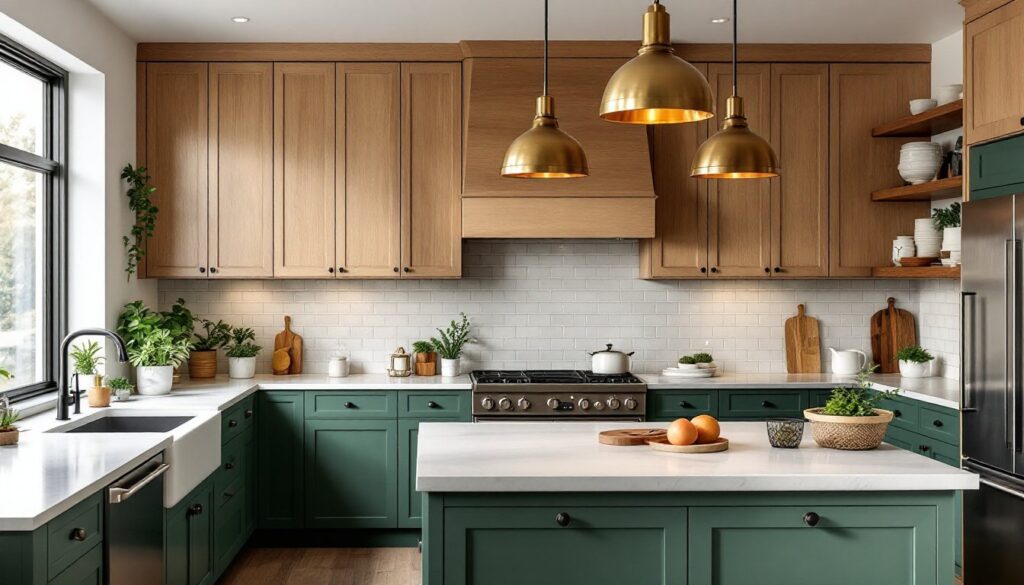
Navy and forest green are holding strong in 2026, especially on islands or lower cabinets paired with white uppers. Oil-based paints (like Benjamin Moore Advance or Sherwin-Williams ProClassic) give the smoothest finish but require mineral spirits for cleanup and take 16+ hours between coats. Water-based paints dry faster but can raise wood grain on the first coat, sand lightly with 220-grit sandpaper after priming.
Natural wood tones are making a comeback, but not the orange-toned oak of the ’90s. Light, blonde woods (white oak, ash) and darker walnut are the move. Clear topcoats have shifted from high-gloss polyurethane to matte or satin water-based poly. They show less wear and don’t yellow over time.
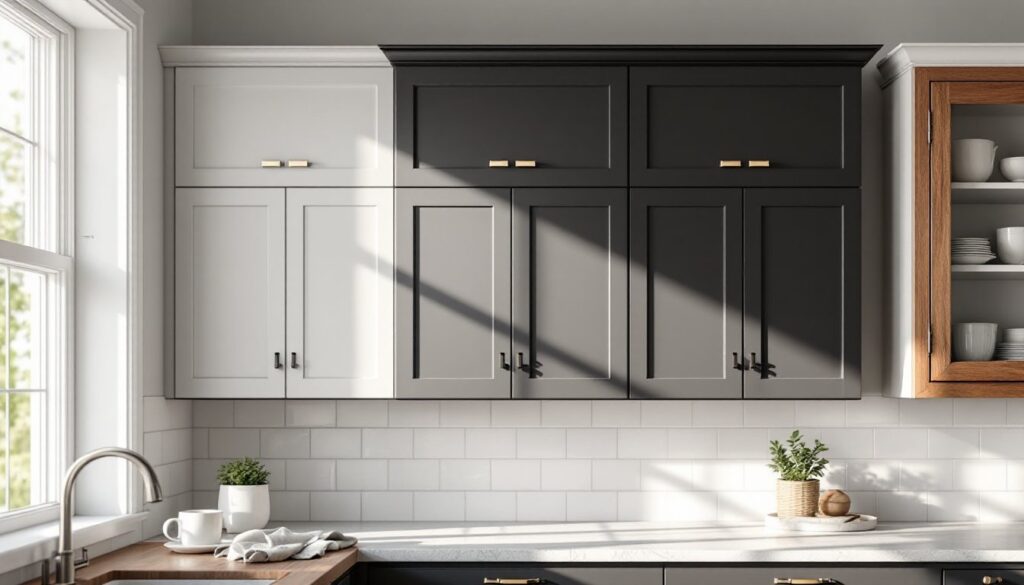
Two-tone kitchens (different colors on uppers and lowers) remain popular but require careful planning. The transition line should land at a logical break, countertop height, not mid-wall. If you’re DIYing, tape off carefully and use a small brush to cut in along edges before rolling. Overspray from a sprayer will bleed between colors.
Textured finishes are emerging: wire-brushed wood, cerused oak (grain filled with white paste), even concrete-look laminates. These hide fingerprints and minor damage better than glossy surfaces. Expect to pay a 20–30% premium for specialty finishes.
Whatever finish you choose, sand between coats (220-grit) and apply at least three topcoats on doors. Cabinets take more abuse than trim or walls. Coverage for cabinet paint runs about 400 square feet per gallon, but doors have two sides, factor that into your material estimate. Contemporary design trends often highlight finishes that prioritize durability alongside aesthetics.
PPE reminder: Always wear a respirator mask (N95 minimum, organic vapor cartridge for oil-based products), safety glasses, and gloves when sanding or applying finishes. Work in a ventilated area or use a fan to exhaust fumes outdoors.