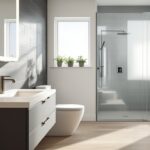

If you’re tired of cluttered counters and generic tile choices, Japandi design offers a refreshing alternative. This fusion of Japanese minimalism and Scandinavian warmth has become one of the most sought-after interior styles, and bathrooms are the perfect place to try it. The aesthetic works because it strips away the excess while keeping the space functional and genuinely inviting. Unlike stark minimalism that can feel cold, Japandi balances clean lines with organic textures and a muted palette that feels both modern and timeless. Whether you’re planning a full remodel or a weekend refresh, the principles are straightforward and surprisingly adaptable to most bathroom layouts.
Key Takeaways
- Japandi bathroom design blends Japanese minimalism with Scandinavian warmth, creating a functional and inviting space that works well in high-moisture environments.
- Use a neutral color palette of whites, soft grays, beiges, and warm taupes with earth-tone accents to achieve the calm, airy aesthetic central to Japandi design.
- Natural materials like teak, stone, ceramic, and matte-finish wood are essential to Japandi style and resist humidity better than modern alternatives like stainless steel.
- Minimize visible clutter by investing in hidden storage solutions such as floating vanities, recessed medicine cabinets, and bamboo organizers that keep the space visually serene.
- Layer soft, warm lighting (3000K–3500K) with task lighting around mirrors and choose fixtures in matte black or brushed brass finishes to complete the Japandi aesthetic.
- Proper ventilation rated for your bathroom’s square footage is critical to protect natural wood finishes and prevent mold damage in a Japandi bathroom.
What Is Japandi Style and Why It Works Perfectly in Bathrooms
Japandi is a portmanteau of Japanese and Scandinavian, blending wabi-sabi (the Japanese philosophy of finding beauty in imperfection) with the cozy, functional hygge of Nordic design. In practice, it means clean geometry, natural materials, neutral tones, and a strong focus on craftsmanship.
Bathrooms are high-traffic, high-moisture spaces that benefit from simplicity. Japandi’s emphasis on durable materials like teak, stone, and ceramic helps resist humidity while maintaining visual calm. The style’s restraint also discourages clutter, critical in a room where cosmetics, towels, and cleaning products can quickly pile up.
Unlike purely modern bathrooms that lean on stainless steel and glass, Japandi introduces warmth through wood grain and linen. It’s practical for DIYers because the palette is forgiving: slight variations in tile or wood tone won’t clash. The goal is harmony, not sterile perfection.
Another advantage: Japandi pairs well with existing plumbing fixtures. You don’t need to gut the space if your tub and toilet are white or off-white. The aesthetic builds around them with accessories, wall treatments, and thoughtful organization.
Essential Color Palettes for a Japandi Bathroom
Start with a neutral base: whites, soft grays, beiges, and warm taupes. These tones reflect light and create the airy feel central to Scandinavian design, while staying grounded enough to honor Japanese restraint.
For walls, consider a matte finish in warm white (not stark builder white). Sherwin-Williams’ Alabaster or Benjamin Moore’s White Dove are popular choices. If you want subtle depth, try a greige (gray-beige hybrid) like Agreeable Gray. Avoid cool blues or grays, they can feel clinical rather than serene.
Accent with earth tones: charcoal, clay, soft sage, or muted olive. These can appear in grout lines, a single feature wall, or textile accents. Keep saturation low. Japandi doesn’t do bold pops of color.
Wood tones should lean warm and mid-range, think white oak, ash, or light walnut. Skip dark espresso or red-toned cherry: they’re too heavy. If you’re installing wood-look tile (a smart, moisture-resistant choice), aim for realistic grain patterns and a matte or low-sheen finish.
Ceiling paint can match the walls or go one shade lighter. Avoid high-gloss anywhere, it disrupts the calm. Flat or eggshell sheens work best, though semi-gloss is acceptable on trim if local humidity is high and you need easier cleaning.
Choosing Natural Materials That Define the Japandi Aesthetic
Wood is non-negotiable. For vanities, teak and white oak resist moisture naturally and age beautifully. Teak contains oils that repel water, making it ideal for wet environments. If you’re building a custom vanity, use actual 1×6 or 1×8 boards (which measure 3/4″ × 5.5″ or 7.25″), not particleboard with veneer. Seal with a water-based polyurethane or a dedicated wood oil like Rubio Monocoat.
For flooring, porcelain or ceramic tile in wood-look or stone-look finishes offers the aesthetic without the maintenance headaches. Large-format tiles (12″×24″ or larger) reduce grout lines and feel more seamless. If you want authentic wood underfoot, engineered hardwood rated for bathrooms can work with proper underlayment and ventilation, but expect it to require refinishing over time.
Stone adds weight and texture. Honed (matte) marble, limestone, or slate work well for countertops or shower surrounds. Avoid high-polish granite, it’s too formal. For budget-conscious projects, quartz slabs in neutral tones mimic natural stone and require less sealing. Cambria and Caesarstone both offer suitable colorways.
Incorporate bamboo or rattan in accessories: soap dispensers, trays, or a stool. These materials nod to Japanese craft traditions and bring organic texture without dominating the space. Woven baskets for towel storage fit the same philosophy.
Skip plastic wherever possible. Metal hardware should be matte black, brushed brass, or unlacquered bronze, finishes that develop a patina align with wabi-sabi principles. Chrome feels too cold for Japandi.
Minimalist Fixtures and Hardware for a Clean, Functional Look
Choose wall-mounted faucets if your plumbing allows. They free up counter space and simplify cleaning. Delta and Kohler both offer single-handle models in matte black or brushed nickel that suit Japandi. Expect to hire a plumber if you’re relocating supply lines: this isn’t a simple swap.
For the vanity, a vessel sink in white ceramic or concrete sits cleanly on a wood countertop. Alternatively, an undermount sink disappears into the counter for maximum minimalism. Avoid ornate or colored basins, they compete with the palette.
Toilets should be one-piece, elongated bowl designs with concealed trapways. TOTO and American Standard make models that are ADA-compliant and low-profile. If budget allows, a wall-hung toilet maximizes floor space and simplifies mopping, though installation requires opening the wall to install a carrier.
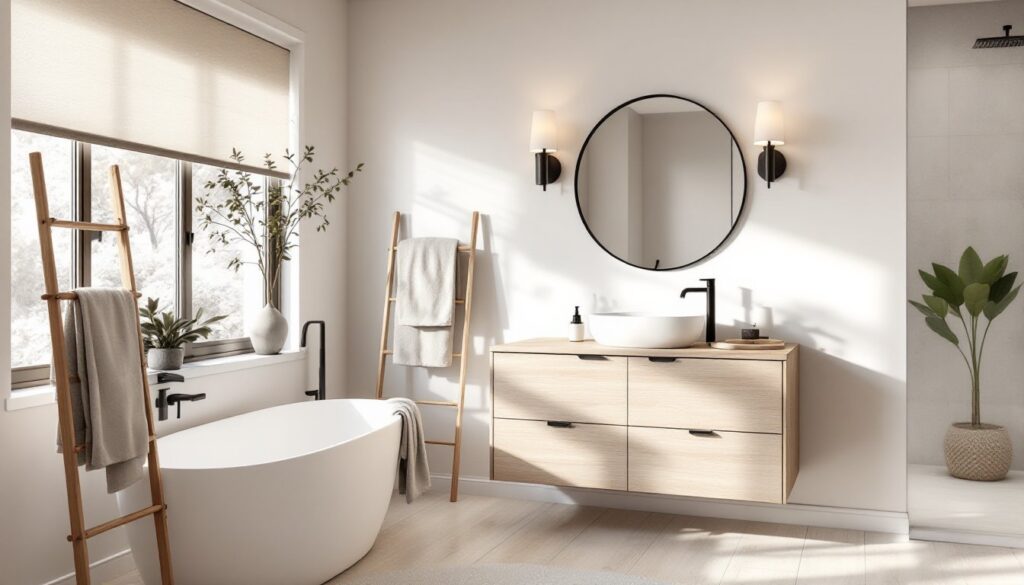
Shower fixtures should match your faucet finish. A handheld wand on a slide bar is more functional than a fixed rain head alone. For tub fillers, a floor-mounted option works well with freestanding soaking tubs, which are quintessentially Japandi. Look for tubs in matte white or natural stone composite.
Cabinet hardware: simple cylindrical pulls or recessed finger pulls in matte black or brass. Companies like Schoolhouse Electric and Rejuvenation carry options that feel handcrafted without being fussy. Avoid anything with decorative flourishes.
Safety note: When working around plumbing, shut off water at the main and have towels ready for residual drainage. If soldering copper pipe, wear safety goggles and work in a ventilated area with a fire extinguisher nearby.
Japandi-Inspired Storage Solutions and Organization Ideas
Japandi demands that everything has a home, visible clutter breaks the aesthetic. Start with a floating vanity to open up floor space and make the room feel larger. Build it from 3/4″ plywood with a hardwood veneer, or buy a ready-made unit from companies like Native Trails or Pottery Barn.
Inside cabinets, use drawer dividers and small bins to corral toiletries. Bamboo organizers from The Container Store or Muji work well. For open shelving, limit items to essentials: neatly folded towels, a ceramic soap dish, a single potted plant.
Install recessed medicine cabinets rather than surface-mounted boxes. Robern makes frameless models that disappear into the wall. If you’re cutting into drywall, check for studs and electrical first, use a stud finder and non-contact voltage tester. In load-bearing walls or near plumbing, consult a contractor.
For towels, wall-mounted wooden pegs or a teak ladder rack lean into the aesthetic. Skip bulky towel bars. Hooks should be spaced 12″–16″ apart and anchored into studs or with heavy-duty drywall anchors rated for at least 50 lbs.
Keep countertops nearly bare. A single tray corrals hand soap and lotion. If you need more storage, a narrow rolling cart in wood and metal can tuck beside the vanity. Many home design platforms showcase creative Japandi storage that balances form and function.
Lighting and Decor Elements to Complete Your Japandi Bathroom
Lighting in Japandi bathrooms should feel soft and layered. Avoid a single harsh overhead fixture. Instead, combine recessed LED downlights (3000K–3500K color temperature for warm white) with task lighting around the mirror.
For vanity lighting, sconces flanking the mirror provide even, shadow-free illumination. Choose designs with linen or rice paper shades for diffused light. Rejuvenation and Cedar & Moss offer options that fit the style. Mount sconces 60″–65″ from the floor, centered on the user’s face, not the mirror edge.
If you have a window, sheer linen or bamboo blinds filter daylight without blocking it. Natural light is central to both Scandinavian and Japanese design. For privacy, consider frosted window film, 3M makes versions that install with soapy water and a squeegee.
Decor should be minimal and purposeful. A single ceramic vase, a small bonsai or succulent, or a stone soap dish is enough. Avoid gallery walls or busy artwork. If you want art, choose a simple black-and-white print or a piece of Japanese calligraphy in a slim frame.
Incorporate textiles thoughtfully: a linen shower curtain in oatmeal or charcoal, a woven jute bath mat, or Turkish cotton towels in white or gray. Texture matters more than pattern in Japandi, stick to solids or subtle weaves.
For a finishing touch, a round or rectangular framed mirror in black metal or light wood keeps sight lines clean. Oversized mirrors (36″+ wide) amplify light and space. You can find curated bathroom design ideas that emphasize this kind of restrained elegance.
Ventilation is critical in any bathroom remodel. Ensure your exhaust fan is rated for the room’s square footage (typically 1 CFM per square foot). Poor ventilation will damage wood finishes and promote mold, especially problematic with natural materials. Many modern bath remodels integrate quiet, energy-efficient fans that meet current building codes.
Conclusion
Japandi bathroom design isn’t about trends, it’s about intention. Every material, fixture, and detail should earn its place through function or beauty, ideally both. The result is a space that feels calm, timeless, and genuinely livable. Start with the palette and materials, then layer in fixtures and thoughtful storage. With patience and attention to craft, you’ll end up with a bathroom that works as hard as it looks good.