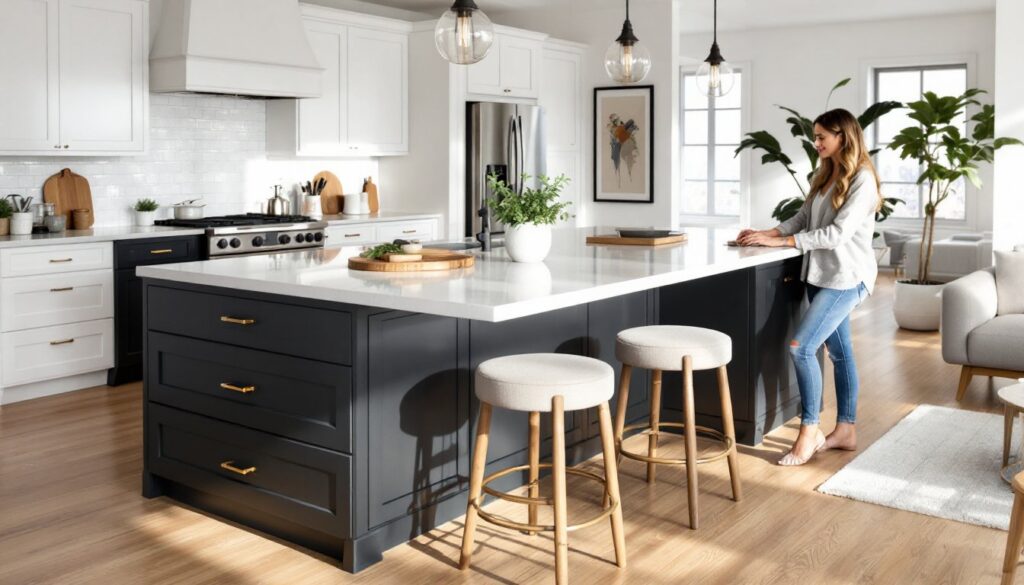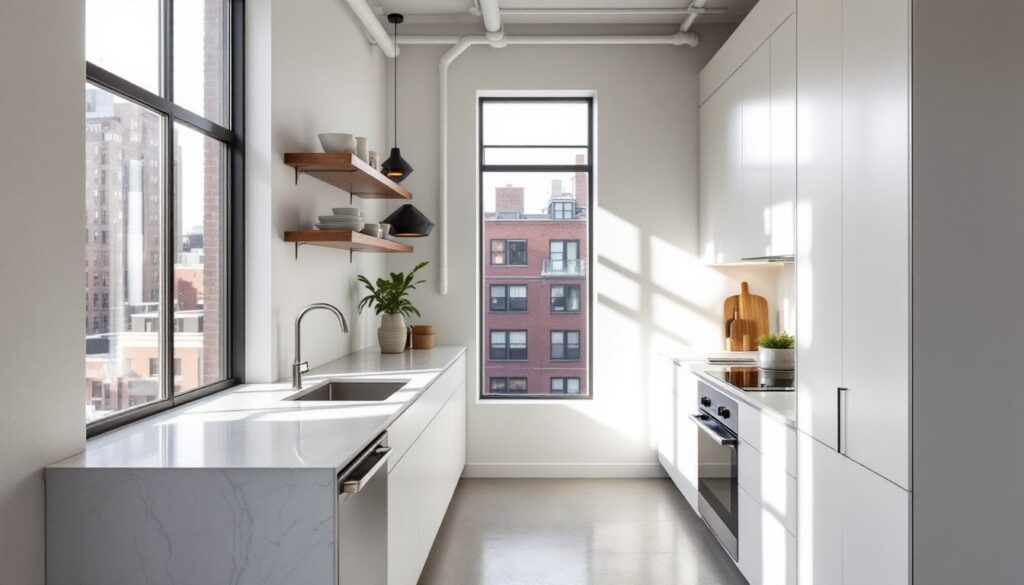

Designing a kitchen in New York City is nothing like planning one in the suburbs. Between pre-war buildings with quirky layouts, co-op boards with strict renovation rules, and square footage that costs more per inch than anywhere else in the country, NYC kitchens demand creative problem-solving. Whether you’re working with a galley setup in a walk-up or a loft space in a converted warehouse, the goal is the same: maximize function without sacrificing style. This guide walks through the key considerations, popular styles, space-saving tricks, and budget realities for kitchen design in New York.
Key Takeaways
- Kitchen design in New York requires unique solutions due to small square footage, pre-war building constraints, and co-op board regulations that differ from suburban renovation standards.
- Modern minimalist and industrial loft-inspired styles dominate NYC kitchen design, with both prioritizing clean lines and efficient use of limited space through handle-less cabinets, quartz countertops, and strategic lighting.
- Space-saving strategies like vertical storage, corner pull-outs, appliance downsizing, wall-mounted organizers, and mobile islands can recover usable square footage in compact NYC kitchens.
- NYC kitchen renovations require ALT-2 permits from the Department of Buildings, licensed electricians and plumbers, co-op board approval with 4-8 week timelines, and adherence to strict building codes that protect structural integrity.
- Budget between $15,000–$150,000+ for NYC kitchen renovations depending on scope, with labor costs consuming 40-50% of the budget; expect mid-range projects to recoup 60-70% at resale while significantly improving livability.
Why New York Kitchens Require Unique Design Approaches
NYC kitchens aren’t just small, they’re often awkwardly shaped, hemmed in by load-bearing walls, steam pipes, and century-old plumbing that can’t be moved without major expense. The typical Manhattan kitchen ranges from 50 to 100 square feet, compared to the national average of 150-200 square feet. That means every inch counts.
Pre-war buildings bring charm but also challenges: uneven floors, plaster walls that crumble when you mount cabinets, and electrical systems that may not support modern appliance loads without an upgrade. Post-war and newer construction offer more flexibility, but co-op and condo boards often restrict work hours, require licensed contractors, and mandate specific materials or finishes.
Vertical space becomes critical. Standard upper cabinets run 30 to 42 inches tall, but in NYC, going to the ceiling with custom cabinets or open shelving recovers storage that would otherwise sit empty. Similarly, shallow 12-inch base cabinets can replace traditional 24-inch depths along one wall to preserve walkway clearance in galley kitchens.
Natural light is often limited. Many kitchens face air shafts or neighboring buildings just feet away. This makes lighting design, under-cabinet LEDs, recessed cans, pendant fixtures, non-negotiable rather than decorative. Choose color temperatures around 3000K to balance warmth with task visibility.
Finally, noise and odor control matter more in multi-unit buildings. A range hood rated for at least 300 CFM helps, but check if your building allows external venting or requires recirculating models. Soundproofing dishwashers and adding door sweeps can keep peace with neighbors.
Popular Kitchen Design Styles for NYC Homes
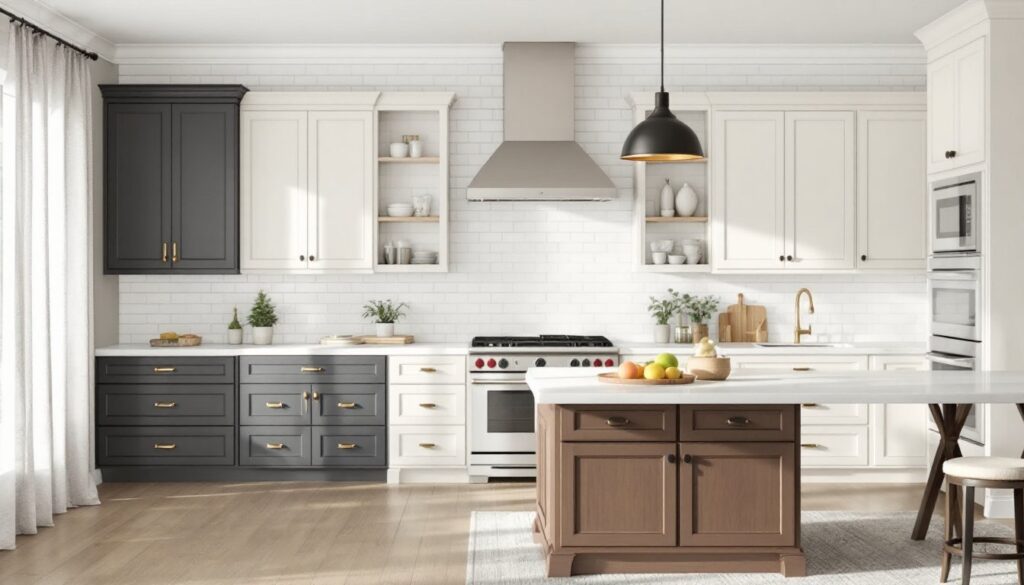
New York kitchens reflect the city’s architectural diversity, but two styles dominate contemporary renovations: modern minimalist and industrial loft-inspired. Both prioritize clean lines and efficient use of space, but they differ in material choices and visual weight.
Modern Minimalist Kitchens
Minimalist kitchens strip away ornamentation and focus on seamless surfaces, integrated appliances, and monochromatic or two-tone palettes. Flat-panel (slab) cabinet doors in matte white, soft gray, or natural wood veneer are standard. Handle-less cabinets with push-to-open mechanisms or slim recessed pulls maintain the uncluttered look.
Countertops lean toward quartz in solid colors, Caesarstone, Silestone, or Cambria, because they’re non-porous, low-maintenance, and come in large slabs that minimize seams. Pair them with a matching or contrasting backsplash in subway tile, large-format porcelain, or even the same quartz run up the wall for a monolithic effect.
Appliances are typically panel-ready (refrigerator, dishwasher) so they blend into cabinetry. Cooktops are often induction for energy efficiency and faster heat response. Open shelving, if used, is minimal, one or two floating shelves in wood or metal to break up upper cabinets without adding visual clutter. Many stunning minimalist designs in NYC kitchens prioritize function over fuss.
Industrial Loft-Inspired Designs
Industrial kitchens embrace raw materials: exposed brick, steel-framed windows, concrete or butcher-block countertops, and open metal shelving. This style works especially well in converted loft buildings in neighborhoods like DUMBO, Williamsburg, or Chelsea, where high ceilings and original architectural elements are part of the appeal.
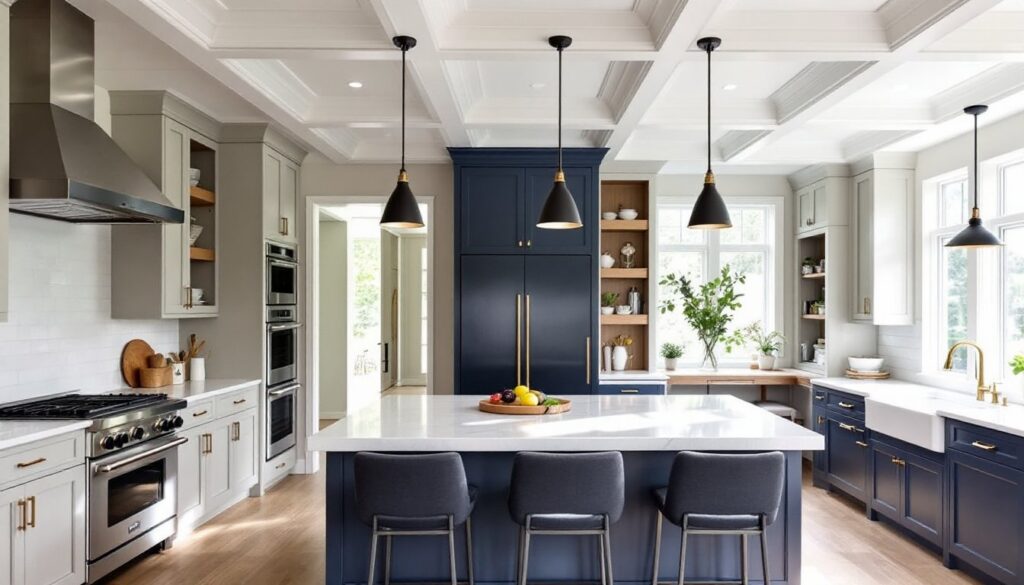
Cabinets are often stained wood or painted in darker tones, charcoal, navy, or matte black, with visible hardware like brushed steel or oil-rubbed bronze pulls. Upper cabinets may be skipped entirely in favor of open shelving made from reclaimed wood planks on black iron pipe brackets.
Countertops might be honed concrete, soapstone, or thick butcher block (minimum 1.5 inches). Concrete requires sealing every 1-2 years to prevent staining. Butcher block needs periodic oiling with food-safe mineral oil.
Lighting fixtures make a statement: Edison-bulb pendants, cage-style sconces, or track lighting on exposed conduit. Backsplashes can be subway tile in a stacked (not offset) pattern, stainless steel sheets, or even left as exposed brick sealed with a breathable masonry sealer.
Both styles work in small spaces, but minimalist tends to visually expand a room, while industrial adds character at the risk of feeling heavier if not balanced with enough light and open areas.
Space-Saving Solutions for Small New York Kitchens
When you’re working with a kitchen the size of a walk-in closet, standard layouts don’t apply. Here are proven tactics that recover usable space.
Corner cabinets are dead zones unless you add pull-out organizers or a lazy Susan. A blind corner pull-out system (like Rev-A-Shelf) brings items stored deep in the corner within reach. Alternatively, open corner shelving wastes less interior volume.
Appliance downsizing is common. Swap a 30-inch range for a 24-inch slide-in or even an 18-inch European-style range if you rarely cook for more than two. Consider a 24-inch dishwasher or an 18-inch model. Refrigerators come in counter-depth and apartment-size (24-inch wide) formats that free up floor space.
Wall-mounted everything keeps counters clear. Magnetic knife strips, wall-mounted spice racks, pegboards for utensils, and fold-down cutting boards all reduce clutter. Mount a microwave under the cabinet or on a shelf instead of occupying counter real estate.
Extend countertops over appliances. A cutting board or pull-out surface over a compact cooktop adds prep space when the burners aren’t in use. Butcher-block covers for sinks do the same.
Use the ceiling. Pot racks, hanging stemware holders, and ceiling-mounted shelves take advantage of vertical space. In kitchens with ceilings above 9 feet, adding a second tier of cabinets or a storage loft is worth exploring.
Pocket or barn doors replace swinging doors that eat floor space. If the kitchen opens to a living area, a sliding partition or frosted glass door can close it off when needed without permanent walls.
Integrated storage within islands or peninsulas, pull-out trash, recycling bins, drawer-style dishwashers, maximizes every cubic inch. If there’s room for a small island (minimum 24 inches wide), make it mobile with locking casters so it can be moved when you need clearance.
Skinny pull-outs (6 to 9 inches wide) fit between appliances or at the end of a cabinet run. They’re ideal for spices, oils, or baking sheets. These are often afterthoughts but can be the most-used storage in a tight kitchen.
Navigating NYC Building Codes and Co-op Board Requirements
Renovating a kitchen in New York City almost always requires permits, and if you’re in a co-op or condo, you’ll need board approval before you touch a wall.
Permits are issued by the NYC Department of Buildings (DOB). You’ll need an ALT-2 (alteration type 2) permit for most kitchen renovations that involve plumbing, electrical, or gas work. If you’re moving walls, especially in a pre-war building, a structural engineer may need to confirm which walls are load-bearing. Removing or altering a load-bearing wall requires a steel beam or laminated veneer lumber (LVL) header and usually triggers an ALT-1 permit, which is more involved.
Electrical work must meet the National Electrical Code (NEC) and NYC amendments. Kitchens require at least two 20-amp small appliance circuits, separate from lighting. GFCI protection is mandatory for all countertop receptacles within 6 feet of a sink. If you’re adding new circuits or upgrading your panel, use a licensed electrician.
Plumbing changes, relocating a sink or adding a dishwasher, require a licensed master plumber in NYC. Gas line work, whether for a range or cooktop, also requires a licensed plumber. Always schedule a DOB inspection after rough-in and before closing up walls.
Co-op and condo boards add another layer. Most require an alteration agreement, proof of insurance (often $1-2 million in liability coverage), contractor licenses, and a detailed scope of work. Some boards restrict work to weekdays between 9 a.m. and 5 p.m., prohibit weekend or evening work, and require a refundable deposit to cover potential building damage.
Boards may also have rules on finishes, some buildings prohibit certain flooring types (like ceramic tile over wood joist floors) due to weight or sound transmission concerns. Always submit plans early: approval can take 4-8 weeks.
Sprinkler and fire safety: If your building has a sprinkler system, you may need to relocate heads if you move walls or add soffits. This requires a licensed fire suppression contractor.
Skipping permits is risky. If you sell, the building or a buyer’s attorney may require a Certificate of Occupancy or sign-off letter proving all work was legal. Unpermitted work can delay or kill a sale.
Budgeting Your Kitchen Renovation in New York
Kitchen renovations in NYC cost significantly more than the national average due to labor rates, permitting complexity, material delivery challenges, and the need for licensed trades.
Budget tiers break down roughly as follows (for a 70-100 square foot kitchen):
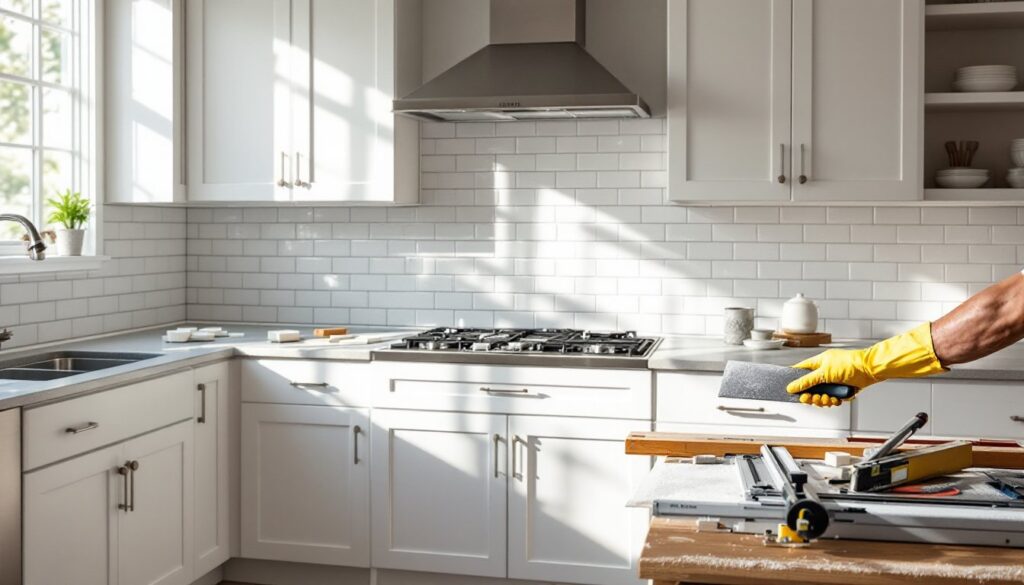
- Basic refresh ($15,000–$30,000): Paint, new cabinet hardware, countertop replacement (laminate or butcher block), updated lighting, minor appliance upgrades. No structural changes.
- Mid-range renovation ($40,000–$70,000): New cabinets (stock or semi-custom), quartz or granite counters, subway tile backsplash, new appliances, updated plumbing fixtures, refinished or new flooring. Minor layout tweaks.
- High-end remodel ($80,000–$150,000+): Custom cabinetry, premium stone or engineered surfaces, designer fixtures, pro-grade appliances, possible layout changes, high-end finishes. Includes all permits, engineering, and board fees.
Labor typically eats 40-50% of the budget in NYC. A general contractor or kitchen design-build firm will charge a markup on materials and subs, but they handle coordination, permits, and inspections. Expect $100–$200 per hour for skilled trades (electricians, plumbers).
Materials: Stock cabinets from Home Depot or IKEA run $75–$150 per linear foot. Semi-custom (Kraftmaid, Merillat) are $150–$300/linear foot. Custom (local cabinet shops) start around $500/linear foot and climb from there. Quartz countertops average $80–$120 per square foot installed: granite is similar. Butcher block is cheaper ($40–$70/sq ft), but requires more maintenance.
Appliances: A basic package (range, refrigerator, dishwasher, microwave) runs $2,500–$5,000. Upgrading to stainless or panel-ready models pushes that to $5,000–$10,000. Pro-grade ranges (Wolf, Thermador, Viking) start around $5,000 for the range alone.
Hidden costs include demo and disposal (tight staircases and no freight elevators drive up costs), asbestos or lead abatement in older buildings, temporary kitchen setups if you’re living on-site, and building fees or deposits.
Cost-saving moves:
- Keep the existing layout (moving plumbing and gas is expensive)
- Refinish or reface cabinets instead of replacing
- Choose stock cabinets and customize with hardware and paint
- DIY demo (with landlord or board approval) to save $1,500–$3,000
- Use a mix of high and low: splurge on countertops, save on backsplash with simple subway tile
- Shop discount and surplus outlets for appliances and materials
Always add 15-20% contingency for unforeseen issues, old wiring, hidden water damage, or supply delays. In NYC, something always comes up.
Finally, factor in the value return. According to recent data, a mid-range kitchen remodel in NYC recoups roughly 60-70% at resale, but the improved livability and marketability often justify the spend, especially in competitive co-op and condo markets.