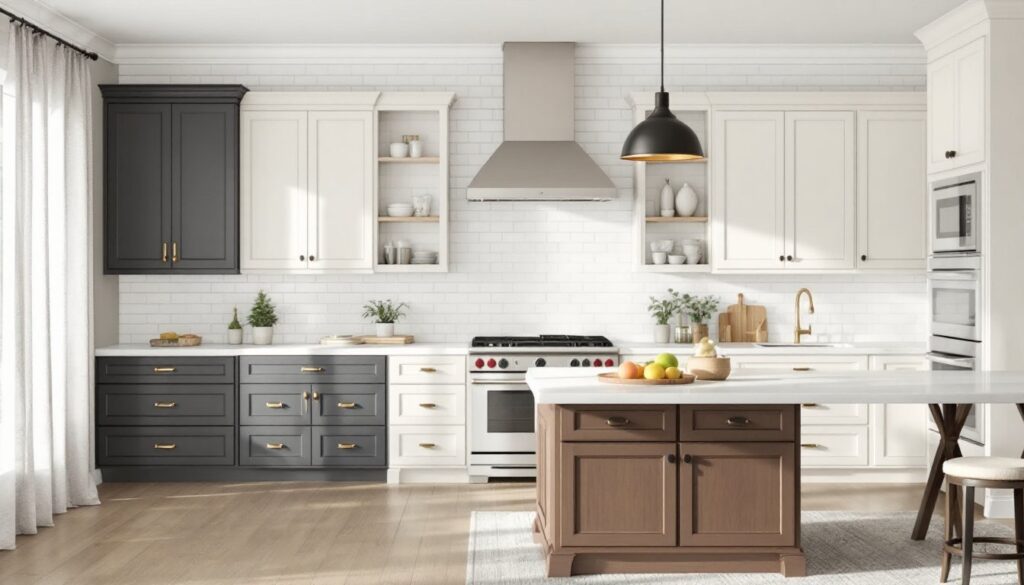

Cabinet doors set the entire tone of a kitchen. They’re the first thing people notice when they walk in, and they dictate whether the space feels modern, traditional, cluttered, or calm. Swapping out cabinet doors, or choosing the right style for a remodel, is one of the highest-impact changes a homeowner can make without tearing down walls. This guide covers popular door styles, material choices, current color and finish trends, and the hardware that ties it all together. Whether someone’s planning a full kitchen overhaul or a budget-friendly refresh, understanding cabinet door design is the foundation of a successful project.
Key Takeaways
- Kitchen cabinet door design is a high-impact investment that sets the tone of the entire kitchen, with Shaker and flat-panel (slab) doors being the most versatile and widely available styles.
- Material choice—whether solid hardwood, MDF, plywood with veneer, thermofoil, or laminate—significantly affects durability, cost, and moisture resistance, with MDF and plywood offering the best balance for DIY projects.
- Warm whites with cream or greige undertones, two-tone designs with darker lowers, and natural wood finishes are the dominant color and finish trends in 2026, with matte and satin finishes preferred over high-gloss.
- Hardware selection, including pull size, finish, and placement, has enormous visual impact and can refresh a kitchen for $100–$300 without replacing doors.
- Planning for proper surface preparation, primer application, and finish coats with high-quality acrylic-alkyd hybrid paint will deliver professional results when painting cabinet doors as a DIY project.
Popular Kitchen Cabinet Door Styles to Consider
Door style is the visual anchor of any kitchen. It influences everything from perceived room size to how well the space ages over time. The two most versatile and widely available styles are Shaker and flat-panel (slab) doors, but there are plenty of variations within each category.
Shaker Style Doors
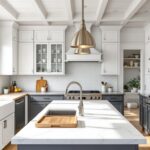
Shaker doors feature a five-piece construction: four rails forming a recessed center panel. The frame is typically ¾” thick, with a flat or slightly raised panel inset. This style originated with 18th-century Shaker communities and remains popular because it works in both traditional and contemporary kitchens.
Shaker doors are forgiving during installation. The recessed panel hides minor wood movement, and the clean lines don’t highlight imperfections the way ornate profiles do. They’re available in every material, from solid hardwoods like maple, oak, and cherry to MDF (medium-density fiberboard) with a painted finish.
For a DIYer replacing doors, Shaker is the easiest to source. Most big-box stores and cabinet suppliers stock unfinished Shaker doors in standard sizes (12″ to 36″ widths). Custom sizing usually adds two to four weeks to lead time. Homeowners often choose Shaker-style options for their adaptability and timeless appeal.
One consideration: the recessed panel collects dust and grease. Plan to wipe down the frame edges regularly, especially near the stove.
Flat-Panel and Slab Doors
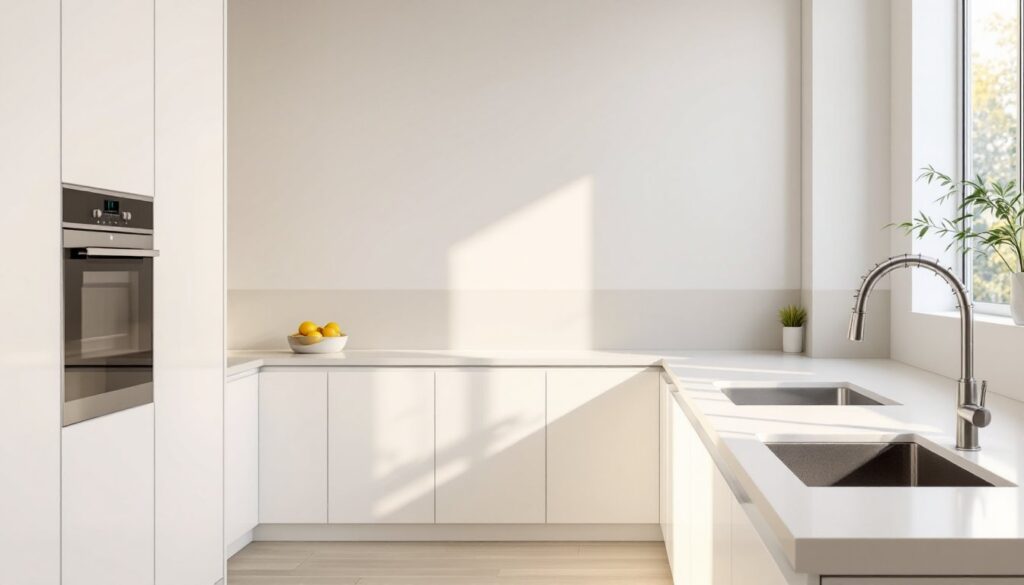
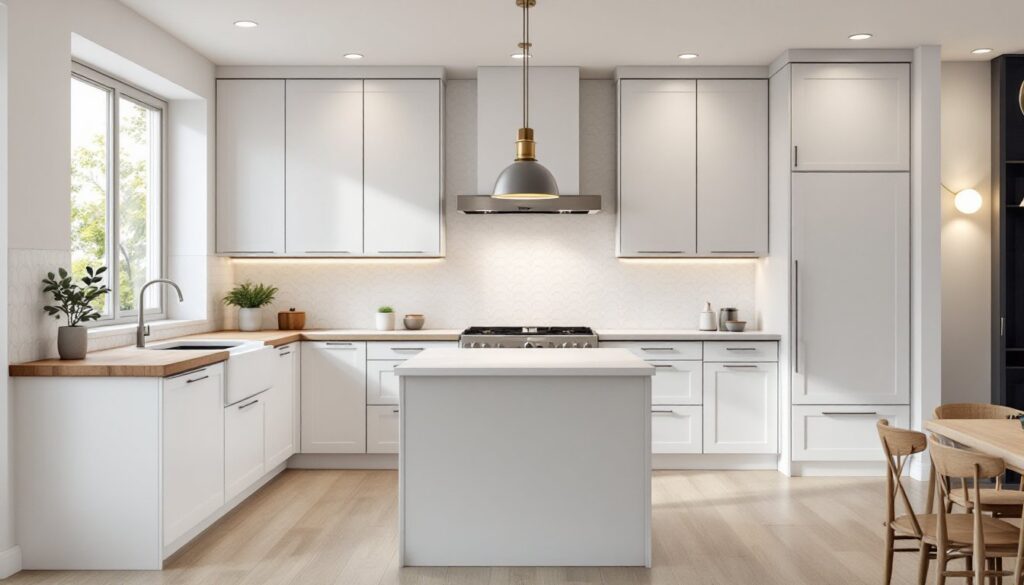
Flat-panel (slab) doors are single-piece construction with no frame or panel detail. They’re the go-to for modern, minimalist, and Scandinavian-inspired kitchens. The lack of ornamentation creates a sleek, uninterrupted surface that makes small kitchens feel larger.
Slab doors can be made from plywood with veneer, solid wood, laminate, thermofoil, or even metal. Because there’s no joinery to hide flaws, the substrate and finish quality matter more. A poorly sanded MDF slab will telegraph every ding and scratch.
Installation is straightforward, no alignment of rails or stiles, but slab doors show every gap and misalignment. Cabinet boxes need to be square and level, or the doors will look crooked even if they’re hung correctly. For reface projects, this style works well because it doesn’t require matching existing joinery patterns.
Slab doors are also popular for horizontal grain matching, where veneer is book-matched across multiple doors for a continuous wood grain pattern. This is a premium detail and typically requires custom fabrication.
Choosing the Right Material for Your Cabinet Doors
Material affects durability, cost, and how well doors hold up to moisture, heat, and daily wear. There’s no universal “best” material, each has trade-offs.
Solid hardwood (maple, oak, cherry, birch) is traditional and repairable. It can be stained or painted, sands well, and lasts decades. But, it’s prone to expansion and contraction with humidity changes, which can cause warping in kitchens without climate control. Expect to pay $40–$80 per door for unfinished hardwood in standard sizes.
MDF is engineered wood made from compressed wood fibers and resin. It’s extremely stable, no warping or grain raising, and takes paint beautifully. Almost all high-end painted cabinetry uses MDF. The downsides: it’s heavy, and if water penetrates the finish (near a sink or dishwasher), it swells and doesn’t recover. MDF doors typically cost $25–$50 each unfinished.
Plywood with veneer combines a stable plywood core with a thin layer of real wood on the surface. It’s lighter than MDF and more moisture-resistant than solid wood. Veneer can be stained, but repairs are tricky, you can’t sand through the veneer without hitting plywood underneath. Cost is similar to solid wood.
Thermofoil is MDF wrapped in a vinyl film, usually in white or wood-grain patterns. It’s budget-friendly ($20–$35 per door) and easy to clean, but the film can peel near heat sources (ovens, dishwashers). Not repairable or repaintable.
Laminate (plastic laminate over particleboard or MDF) is durable and available in hundreds of colors and textures. It resists moisture and scratches better than paint, but edges can chip, and it’s difficult to refinish. Popular in mid-century and contemporary designs, with inspiration often drawn from modern design resources.
For a DIY reface or replacement project, MDF for painted finishes and plywood for stained finishes offer the best balance of cost, workability, and performance.
Color and Finish Trends for Cabinet Doors
Cabinet color has more staying power than wall paint, so it’s worth choosing a finish that won’t feel dated in three years. In 2026, the dominant trends balance warmth with simplicity.
White remains the most popular cabinet color, but the undertone has shifted. Stark, cold whites are out: warm whites with cream or greige undertones (like Benjamin Moore’s Swiss Coffee or Sherwin-Williams’ Alabaster) are in. These shades pair well with natural wood tones and brass hardware without feeling too traditional.
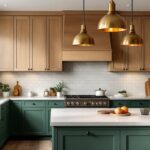
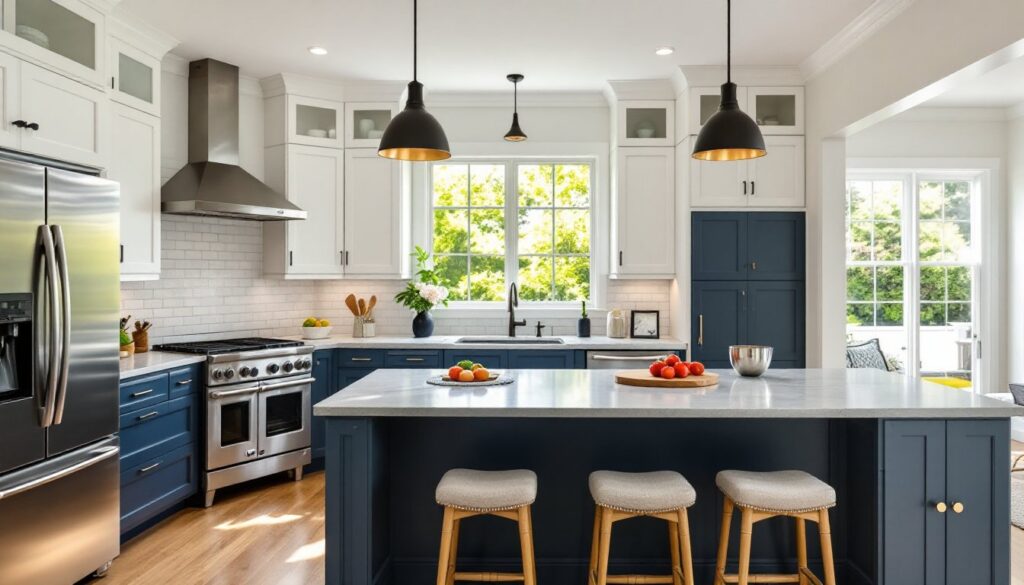
Two-tone kitchens continue to trend, typically with darker lowers (navy, charcoal, forest green) and white or light uppers. This approach grounds the space and hides wear on base cabinets near the floor. When going two-tone, keep the door style consistent, mixing Shaker lowers with slab uppers can look disjointed unless carefully planned.
Natural wood finishes are making a comeback, especially white oak, walnut, and rift-sawn oak with clear or light stains. The grain is the design element, so high-quality veneer or solid wood is essential. Avoid orange-toned stains (golden oak, honey maple), they read dated. Instead, opt for natural, weathered gray, or cerused finishes that let the wood grain show through.
Matte and satin finishes dominate over high-gloss. Matte hides fingerprints and imperfections better, though it can be harder to clean in high-grease areas. For painted doors, a satin or eggshell sheen (20–30% gloss) offers the best durability and cleanability.
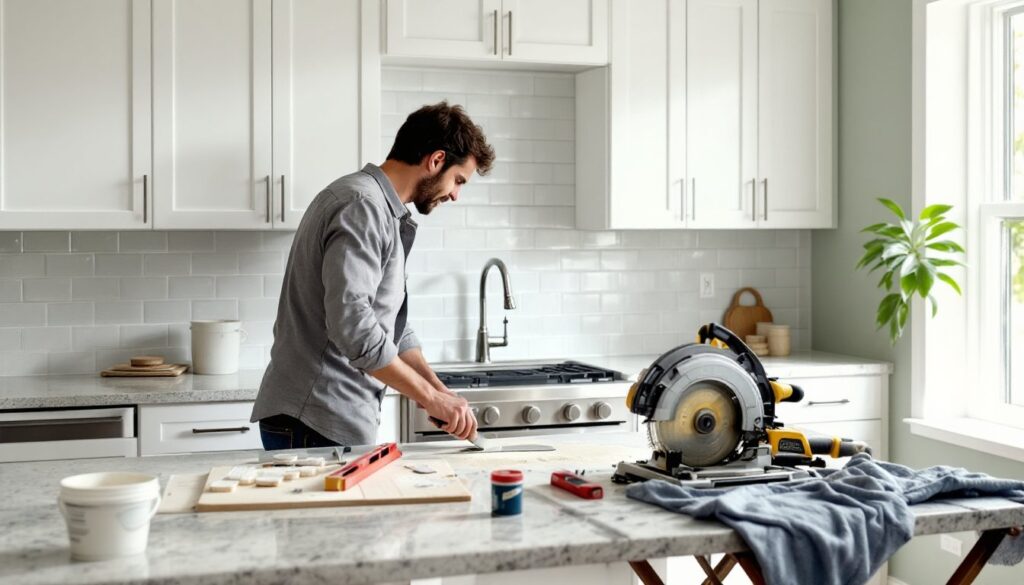
If painting cabinet doors as a DIY project, use a high-quality acrylic-alkyd hybrid paint (like Benjamin Moore Advance or Sherwin-Williams Emerald Urethane). These level well, dry hard, and resist chipping. Plan for two coats of primer (oil-based or shellac-based for tannin blocking on raw wood) and two finish coats. A HVLP spray gun or fine-finish foam roller will give better results than a brush, especially on slab doors.
Hardware and Handle Options That Complete the Look
Cabinet hardware is small in square footage but huge in visual impact. The wrong pulls can undermine an otherwise solid door choice.
Knobs vs. pulls: Knobs work best on doors, pulls (bar handles) on drawers, but this isn’t a hard rule. Pulls on both doors and drawers create a more modern, streamlined look. Knobs are less expensive and easier to install (one screw vs. two), but pulls offer better ergonomics, especially on wide or heavy doors.
Hardware sizing matters. For drawers 12″ to 18″ wide, use a 3″ to 4″ pull (center-to-center spacing). For wider drawers (24″+), go with 5″ to 6″ pulls or consider two smaller pulls. Oversized hardware (8″+ pulls) works on large drawers or for a bold contemporary look, but it can overwhelm traditional cabinetry.
Finish choices in 2026 lean toward unlacquered brass, brushed nickel, matte black, and aged bronze. Polished chrome feels clinical unless the kitchen is very modern. Unlacquered brass develops a patina over time, some homeowners love the lived-in look, others find it messy. If consistency matters, choose a lacquered or PVD-coated brass that won’t tarnish.
Backplate vs. no backplate: Backplates (decorative plates behind the pull) add a traditional or transitional feel and can cover old hardware holes when replacing mismatched pulls. For clean modern or Shaker styles, skip the backplate.
When drilling new hardware holes, use a drill press or cabinet hardware jig to ensure consistent placement. Standard placement for pulls is 2.5″ to 3″ from the bottom edge on uppers and top edge on lowers. Measure twice, drill once, filling and patching wood doors is possible but always visible under stain.
Many kitchen design enthusiasts recommend buying one sample pull before committing to a full set. Hardware photos online rarely show true scale or finish texture.
For a budget-conscious upgrade, replacing hardware alone (without touching doors) can refresh a kitchen for $100–$300, depending on cabinet count. It’s one of the highest ROI cosmetic changes available.
Conclusion
Cabinet door design shapes the entire character of a kitchen. Choosing the right style, material, color, and hardware requires balancing aesthetics with durability and budget. Shaker and slab doors offer the most flexibility, MDF and plywood provide the best performance for painted and stained finishes, and thoughtful hardware pulls the whole look together. Whether tackling a full remodel or a weekend door swap, these fundamentals make the difference between a kitchen that feels finished and one that feels like a compromise.