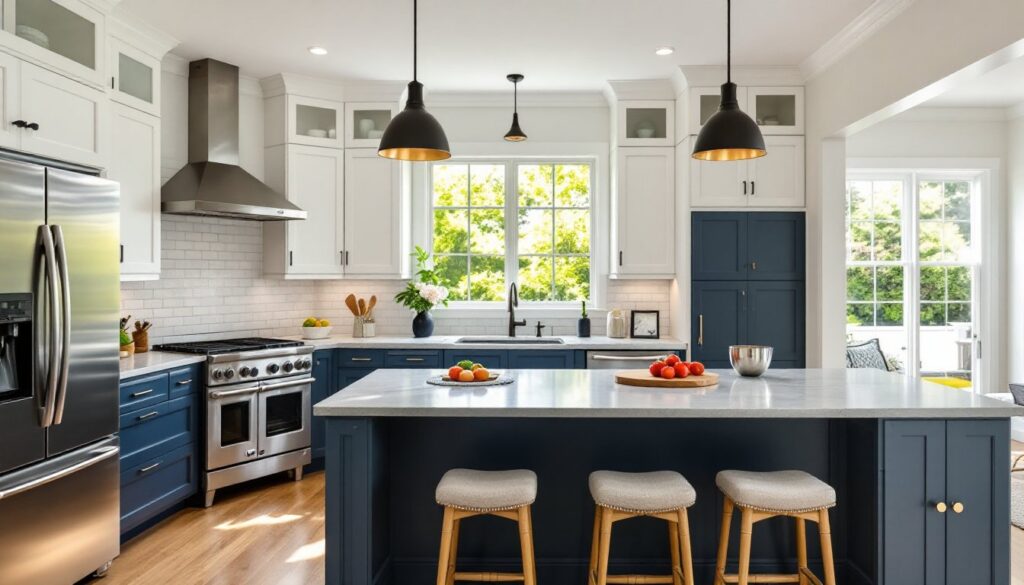

Raleigh’s housing market has shifted dramatically in the past few years, bringing a wave of kitchen renovations to homes built anywhere from the 1970s to last Tuesday. Whether you’re updating a dated galley kitchen in a Cameron Park bungalow or reconfiguring an open-concept layout in a new-build in North Hills, the Triangle’s unique mix of Southern tradition and tech-driven growth demands a kitchen that works hard and looks sharp. This guide covers the design considerations, material choices, and budget realities specific to renovating a kitchen in Raleigh and the surrounding Wake County area. Expect honest advice, not mood boards.
Key Takeaways
- Kitchen design in Raleigh must account for humid subtropical climate, freeze-thaw cycles, and high spring pollen that affect material performance, ventilation, and durability.
- Modern farmhouse and transitional styles dominate Raleigh kitchen renovations, balancing Southern charm with clean functionality while appealing broadly to the Triangle’s diverse homebuyer population.
- Material selection should prioritize moisture resistance: choose plywood-based cabinets with catalyzed finishes, non-porous quartz countertops, porcelain tile, and luxury vinyl plank flooring to withstand North Carolina’s climate.
- Kitchen design layout decisions significantly impact renovation costs—moving plumbing or gas lines more than a few feet can add $1,500–$3,000, making it essential to verify existing infrastructure before planning changes.
- Budget $15,000–$80,000+ for a Raleigh kitchen renovation, with cabinets consuming 30-40% of costs; always get three quotes for materials and add 10-20% for unexpected issues like asbestos abatement or code updates.
- Proper ventilation (minimum 250 CFM for a 30-inch range, ideally 400+ CFM) is non-negotiable in the Triangle’s humid climate, and ducted hoods are always preferable to recirculating options.
Why Raleigh Kitchens Require a Unique Design Approach
Raleigh isn’t Austin, and it’s not Charlotte. The Triangle sits in a humid subtropical climate zone, which means your kitchen will face high humidity from May through September, occasional freeze-thaw cycles in winter, and enough pollen in spring to coat everything yellow. These aren’t trivial concerns, they affect material performance, ventilation needs, and long-term durability.
Most Raleigh homes built before 2000 feature smaller, closed-off kitchens with limited natural light. Newer construction leans heavily toward open floor plans, but often with builder-grade finishes that need upgrading within five years. Either way, you’re likely working within an existing footprint unless you’re ready to pull permits and deal with load-bearing walls.
The local building code follows the North Carolina Residential Code, which is based on the IRC but with state-specific amendments. Any work involving electrical, plumbing, or structural changes typically requires permits through the City of Raleigh or your municipality. If you’re moving a gas line for a new range or adding a structural beam to open up a wall, plan for inspections. Cosmetic updates like cabinetry, countertops, and paint generally don’t require permits, but always verify with your local permitting office before demolition begins.
Raleigh’s population growth has brought a wide range of design preferences, transplants from the Northeast want clean-lined modern kitchens, while longtime residents often lean toward traditional or transitional styles with Southern roots. Your design should reflect how you actually cook and live, not what’s trending in a different climate or culture.
Popular Kitchen Design Styles Taking Over Raleigh Homes
Modern Farmhouse Meets Southern Charm
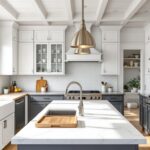
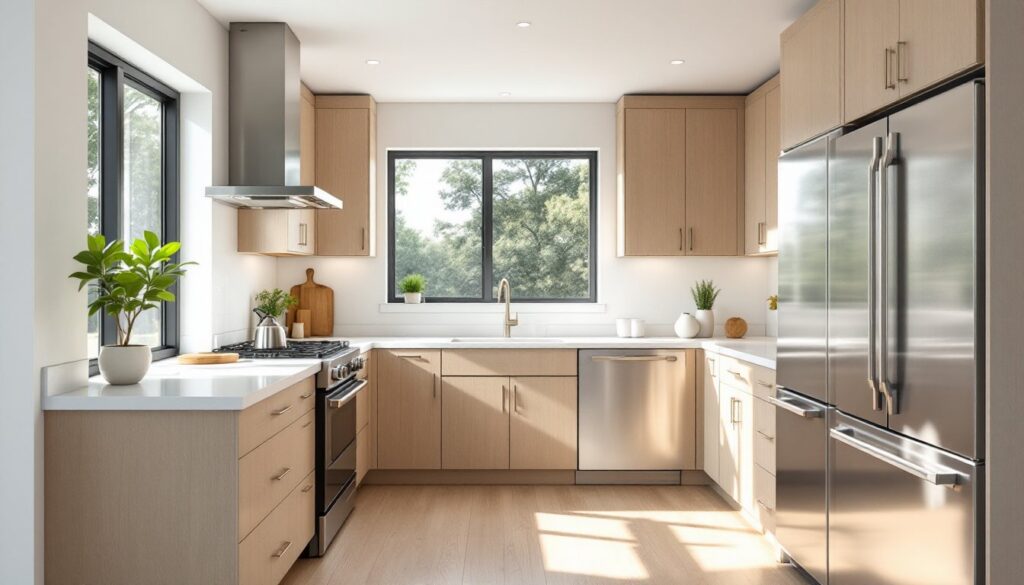
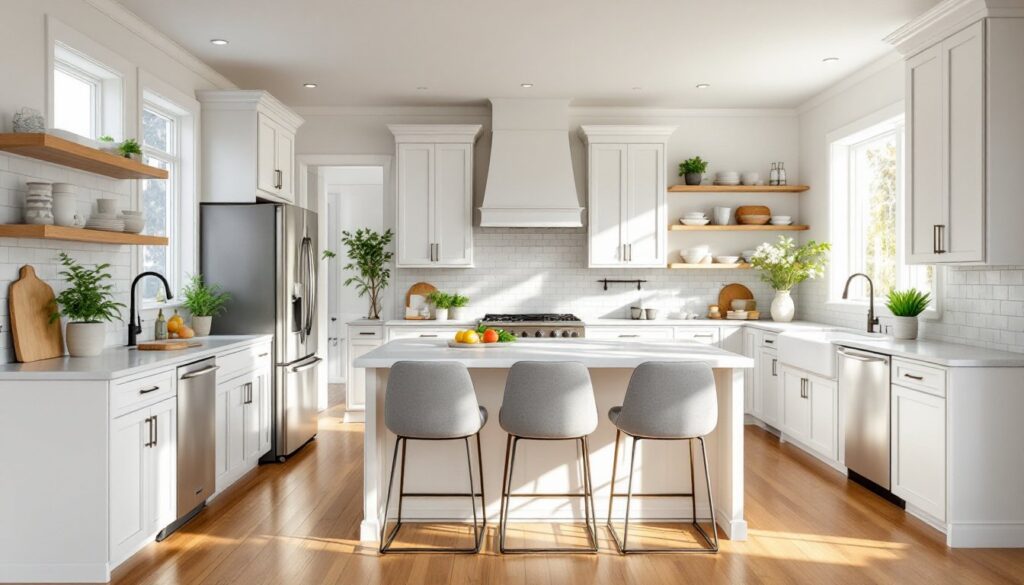
This style dominates Raleigh renovations, and for good reason, it balances the relaxed, hospitable vibe of Southern living with the clean functionality that modern families need. Think shaker-style cabinets in white or soft gray, butcher block or quartz countertops, and open shelving for everyday dishes. Subway tile backsplashes remain popular, though larger-format tiles (3×6 or 4×8) are replacing the standard 3×6 layout for a less busy look.
Authentic farmhouse kitchens used what was local and practical. In Raleigh, that means incorporating reclaimed wood (check local salvage yards like The Scrap Exchange), soapstone or honed granite from North Carolina quarries, and wrought iron or oil-rubbed bronze hardware. Avoid the overly distressed, shabby-chic approach, it reads more coastal cottage than Southern farmhouse. If you’re adding a farmhouse sink, make sure your base cabinet can support the weight. An apron-front fireclay sink can weigh 100+ pounds before you add water and dishes.
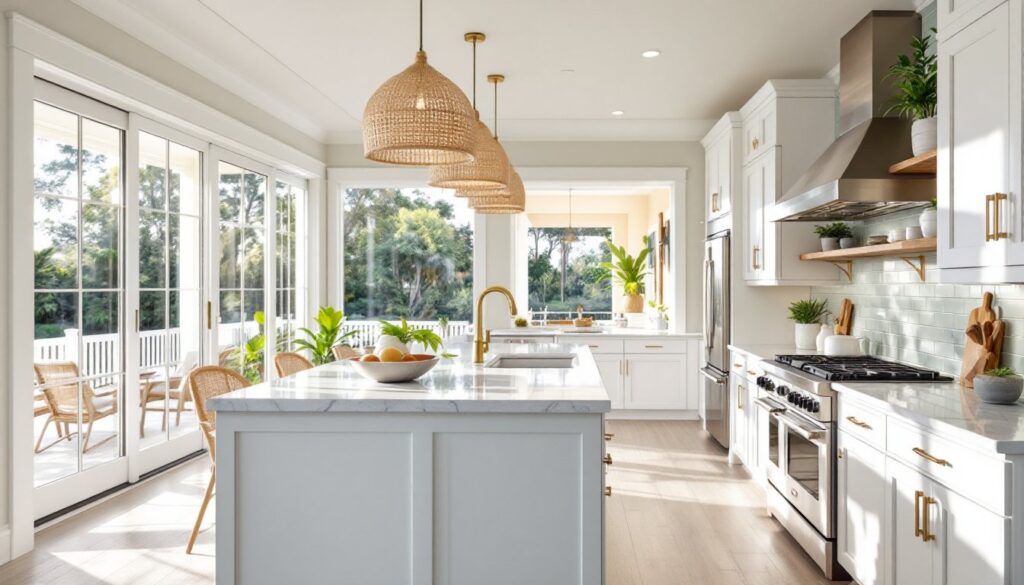
Lighting is critical. Use a mix of pendant lights over islands (hung 30-36 inches above the counter), under-cabinet LED strips for task lighting, and a statement fixture if you have the ceiling height. Many Raleigh homes have 9-foot ceilings on the first floor, which gives you room to play with scale.
Transitional Kitchens for Triangle Area Living
Transitional design is the middle ground between traditional and contemporary, no ornate moldings, but not stark modern either. It’s the safe bet if you’re planning to sell within five to ten years, as it appeals to the widest buyer pool in the Triangle market.
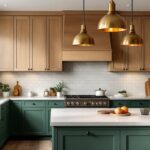
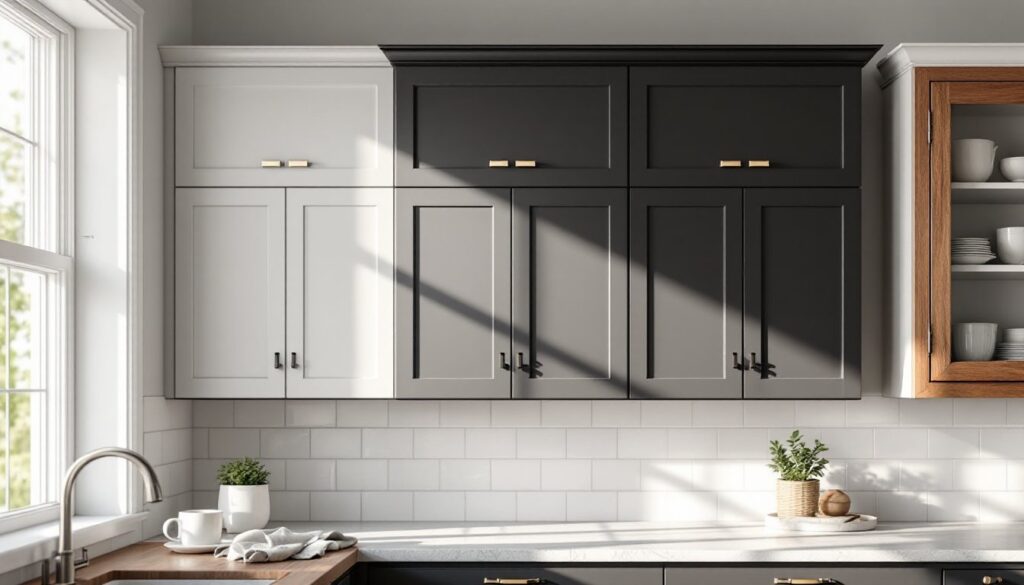
Cabinet doors are typically flat-panel or simple shaker with minimal detailing. Colors trend neutral: soft whites, warm grays, navy blues, or even black for lower cabinets paired with white uppers. Two-tone cabinetry has staying power here, just keep the contrast subtle. Countertops in quartz (Caesarstone, Cambria, or Silestone) are the go-to for durability and low maintenance, especially in homes with kids or heavy cooking routines.
Hardware should be understated, brushed nickel, matte black, or polished chrome in simple pulls and knobs. Avoid overly trendy finishes like rose gold unless you’re committed to updating them in a few years. Backsplashes in transitional kitchens often feature neutral tile, stone, or even slab backsplash that runs continuous with the countertop for a seamless look. When selecting kitchen design ideas for your renovation, focus on functional layouts that maximize storage and workflow, especially in older Raleigh homes with limited square footage.
Essential Layout Considerations for Raleigh Kitchen Renovations
Most Raleigh kitchens fall into one of three layouts: galley, L-shape, or open-concept with an island. If you’re keeping the existing footprint, your layout is largely dictated by plumbing and gas line locations. Moving a sink or range more than a few feet gets expensive fast, budget $1,500–$3,000 just for plumbing and gas rerouting, plus permit fees.
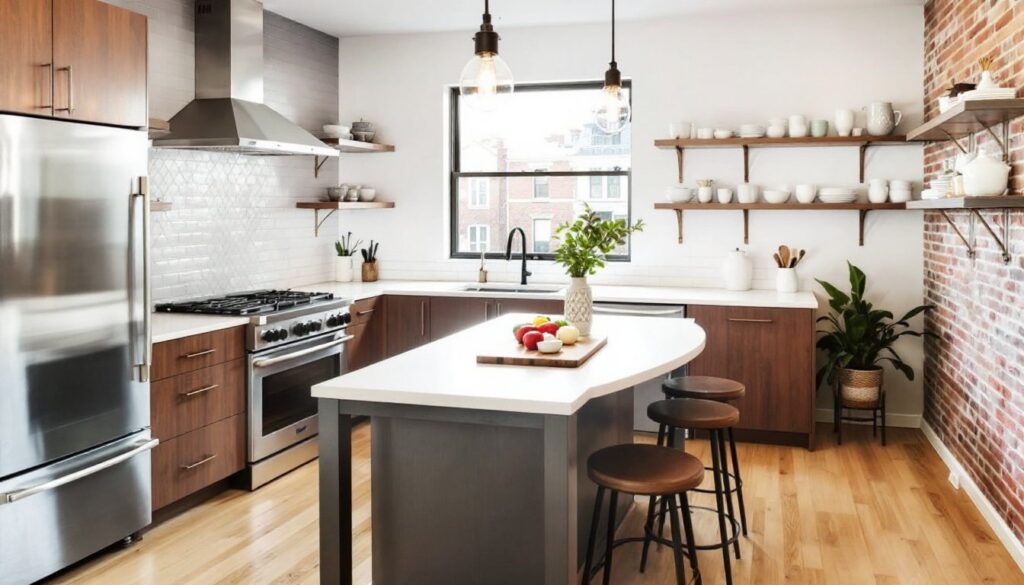
The work triangle (sink, stove, refrigerator) is still a useful guideline, though modern kitchens often function better with work zones: prep zone near the sink, cooking zone around the range, and a cleaning/storage zone near the dishwasher. If you’re adding an island, leave at least 42 inches of clearance on all sides for traffic flow. In tight kitchens, 36 inches is the minimum, but it’ll feel cramped if more than one person is cooking.
Island dimensions matter. A standard countertop height is 36 inches, but if you’re adding seating, consider a raised bar at 42 inches or a lower table-height section at 30 inches. Knee clearance for stools should be at least 15 inches deep and 24 inches wide per person. If your island includes a cooktop or sink, you’ll need to route utilities through the floor, feasible in homes with crawl spaces or basements, more complicated with slab foundations.
Ventilation is non-negotiable in North Carolina’s humid climate. A range hood should move at least 100 CFM per linear foot of range width. For a 30-inch range, that’s a minimum of 250 CFM, though 400+ is better if you cook with high heat or a gas range. Ducted hoods vent to the exterior: recirculating hoods filter and return air to the room. Ducted is always better, but not always possible in condos or homes where exterior venting isn’t an option.
If your home was built before 1980, check for asbestos in flooring or popcorn ceilings before starting demolition. Raleigh has several certified abatement contractors if testing comes back positive. Don’t DIY this, North Carolina law requires licensed professionals for asbestos removal.
Choosing Materials and Finishes That Work in North Carolina’s Climate
Humidity is your kitchen’s biggest enemy. Wood cabinets will expand and contract seasonally, paint can blister if applied in high humidity, and grout will fail without proper sealing. Choose materials that can handle moisture without constant maintenance.
Cabinets: Plywood box construction holds up better than particleboard or MDF in humid climates. If you’re going custom or semi-custom, specify plywood sides and backs. For painted finishes, a catalyzed conversion varnish or two-part polyurethane topcoat resists moisture and wear better than standard lacquer. Stained wood cabinets (oak, cherry, or walnut) need a durable topcoat, skip oil finishes unless you’re committed to annual reapplication.
Countertops: Quartz is the most forgiving option, non-porous, stain-resistant, and available in dozens of colors and patterns. Granite works well but requires sealing every one to two years depending on the stone’s porosity. Butcher block adds warmth but needs regular oiling and isn’t ideal near sinks unless you’re diligent about wiping up water. Avoid marble unless it’s honed and you’re okay with patina and etching from acidic foods.
Flooring: Luxury vinyl plank (LVP) has become the default in Raleigh kitchens for good reason, it’s waterproof, durable, and comes in realistic wood and stone looks. If you prefer tile, porcelain is harder and less porous than ceramic. Skip natural stone in high-traffic kitchens unless you’re prepared to seal it regularly. Hardwood floors can work, but avoid them directly in front of the sink and dishwasher. Engineered hardwood handles moisture swings better than solid wood.
Backsplash: Ceramic or porcelain tile is the workhorse choice. Grout lines should be sealed annually with a penetrating sealer to prevent staining and moisture infiltration. Larger tiles mean fewer grout lines and easier cleaning. If you’re using natural stone, test a sample with water, oil, and lemon juice to see how it reacts, some stones stain or etch easily.
Paint: Use a satin or semi-gloss finish on walls for easier cleaning. Matte and eggshell finishes show every fingerprint and grease splatter. For cabinets, a high-quality paint like Benjamin Moore Advance or Sherwin-Williams Emerald Urethane provides a hard, washable finish. Many home decor inspiration resources showcase beautiful kitchens, but make sure the materials you choose are suited to the Triangle’s climate, not just its aesthetic.
Budgeting Your Raleigh Kitchen Design Project
Kitchen renovations in Raleigh run anywhere from $15,000 for a modest cosmetic update to $80,000+ for a full gut and reconfigure with high-end finishes. The Triangle’s cost of living is lower than major metros, but labor and material costs have climbed significantly since 2022. Expect to pay $75–$150 per hour for licensed electricians and plumbers, and $50–$100 per hour for finish carpenters.
Cabinets are typically the single largest expense, accounting for 30-40% of your budget. Stock cabinets from big-box stores start around $100–$150 per linear foot installed. Semi-custom from local or regional suppliers (like Dura Supreme or KraftMaid) run $200–$400 per linear foot. Fully custom cabinetry from a local shop can hit $500–$1,000+ per linear foot depending on materials and details.
Countertops vary widely. Laminate starts around $20–$40 per square foot installed, quartz runs $60–$120, granite $50–$100, and butcher block $40–$80. Always get at least three quotes and confirm what’s included, fabrication, cutouts for sinks and cooktops, edge profiles, and installation should all be itemized.
Appliances can blow a budget fast. A builder-grade range, refrigerator, and dishwasher package might cost $2,500–$4,000. Mid-range stainless models from brands like Bosch, KitchenAid, or GE Profile typically run $4,000–$7,000 for a full set. If you’re going high-end (Wolf, Sub-Zero, Miele), budget $15,000–$30,000 or more. Don’t finance appliances on store credit, interest rates are brutal. Save or use a 0% intro APR card if you can pay it off within the promo period.
Flooring costs depend on material and room size. LVP runs $3–$8 per square foot installed, porcelain tile $8–$15, and hardwood $10–$20+. A 150-square-foot kitchen might cost $1,200–$3,000 just for flooring.
Labor and permits add up. Permit fees in Raleigh typically run $100–$500 depending on scope. General contractor markups are usually 15-25% on top of subcontractor labor and materials. If you’re acting as your own GC, you’ll save money but take on scheduling, coordination, and liability.
Hidden costs include temporary kitchen setup (microwave, hot plate, and cooler in another room), waste removal (dumpster rental runs $300–$600 for a week), and unforeseen issues like rotted subfloor, outdated wiring, or plumbing that doesn’t meet current code. Budget an extra 10-20% for contingencies. Effective kitchen organization during a renovation can minimize disruption and keep your household running, especially if you’re living onsite during the work.