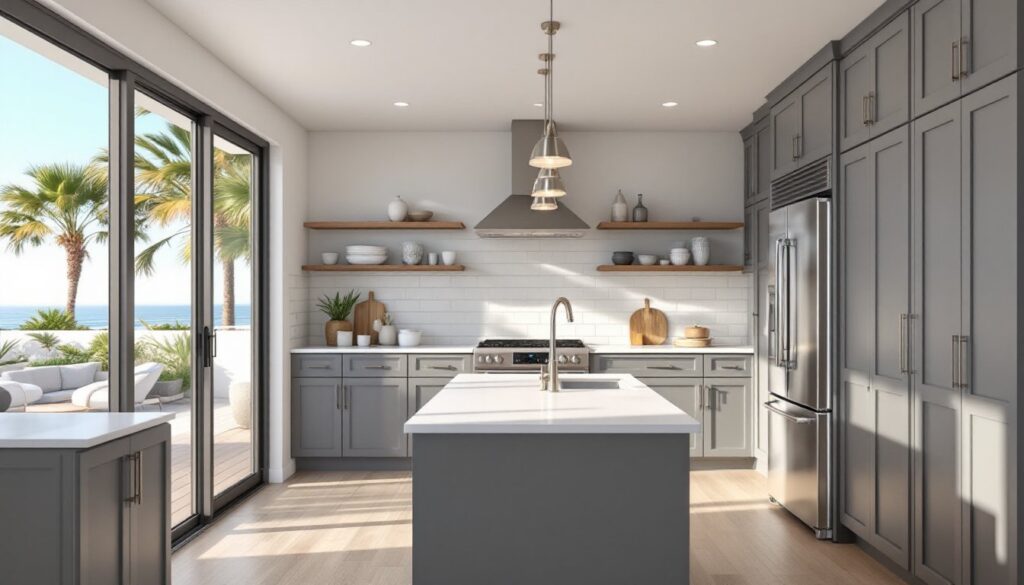

San Diego homeowners face a unique set of design opportunities, and challenges, when planning a kitchen remodel. The city’s year-round mild climate, indoor-outdoor lifestyle, and diverse architectural styles (from Spanish Colonial to mid-century modern) all influence how kitchens should be laid out, finished, and equipped. Whether planning a full gut-and-remodel or a targeted upgrade, understanding how San Diego’s local context shapes material choices, ventilation needs, and spatial flow will save time, money, and regret down the road.
Key Takeaways
- San Diego’s mild coastal climate, low humidity, and indoor-outdoor lifestyle require kitchen design choices that prioritize natural ventilation, UV-resistant finishes, and strong sightlines to patios—avoiding sealed, climate-controlled spaces common in harsher climates.
- Kitchen design in San Diego should respect the home’s original architectural style, whether Spanish Colonial, mid-century modern, or contemporary, while integrating functional zones for prep, cooking, and cleanup instead of relying on outdated work-triangle layouts.
- Material durability in San Diego kitchens focuses on salt-air resistance and UV protection rather than extreme moisture control; consider marine-grade stainless steel, quartz countertops, and UV-resistant cabinet finishes within a mile of the coast.
- Functional kitchen design requires dedicated counter space (15–24 inches minimum per appliance), efficient storage solutions like pull-out pantries and drawer-style cabinets, and compliance with 2022 California Electrical Code, which mandates GFCI protection and separate circuits for appliances.
- Bi-fold doors, pass-through windows, and flush flooring transitions connect your kitchen to outdoor spaces, effectively extending usable entertaining area while maintaining visual flow between indoor and outdoor zones.
- Kitchen remodel budgets in San Diego range from $5,000–$15,000 for minor refreshes to $100,000–$200,000+ for high-end projects; always verify contractor licenses, obtain written estimates, and plan 10–24 weeks for permitting and construction.
Why San Diego’s Unique Climate and Lifestyle Shape Kitchen Design
San Diego’s coastal climate, moderate temps, low humidity, and limited rainfall, allows for design choices that would fail in Phoenix or Seattle. Kitchens can incorporate more natural ventilation, lighter cabinetry finishes, and materials that don’t need to weather extreme temperature swings.
Ventilation and airflow matter here, but not because of oppressive heat. Ocean breezes and minimal AC use mean many homeowners prefer operable windows, pass-throughs, or pocket doors over sealed, climate-controlled spaces. Range hoods should still meet IRC M1503 ventilation standards (typically 100+ CFM for standard ranges), but ducted venting to the exterior is easier to execute in mild climates without worrying about freezing condensation in ductwork.
Material durability is less about moisture resistance and more about UV exposure and salt air in coastal zones. Cabinetry near windows may fade if finished in darker stains without UV-resistant topcoats. Stainless steel appliances and hardware near the coast can pit over time: consider marine-grade stainless (316 grade) or powder-coated finishes if within a mile of the ocean.
Indoor-outdoor living is the defining feature. San Diego homeowners use their kitchens as a hub for backyard entertaining, so sightlines, pass-through windows, and easy access to patios or decks should be prioritized early in the layout phase, not tacked on as an afterthought.
Popular Kitchen Design Styles for San Diego Homes
San Diego’s housing stock is eclectic, Spanish Revival bungalows, mid-century ranches, and new-construction condos all coexist within blocks of each other. Kitchen style should respect the home’s original architecture while meeting modern functional needs.
Coastal and Mediterranean-Inspired Kitchens
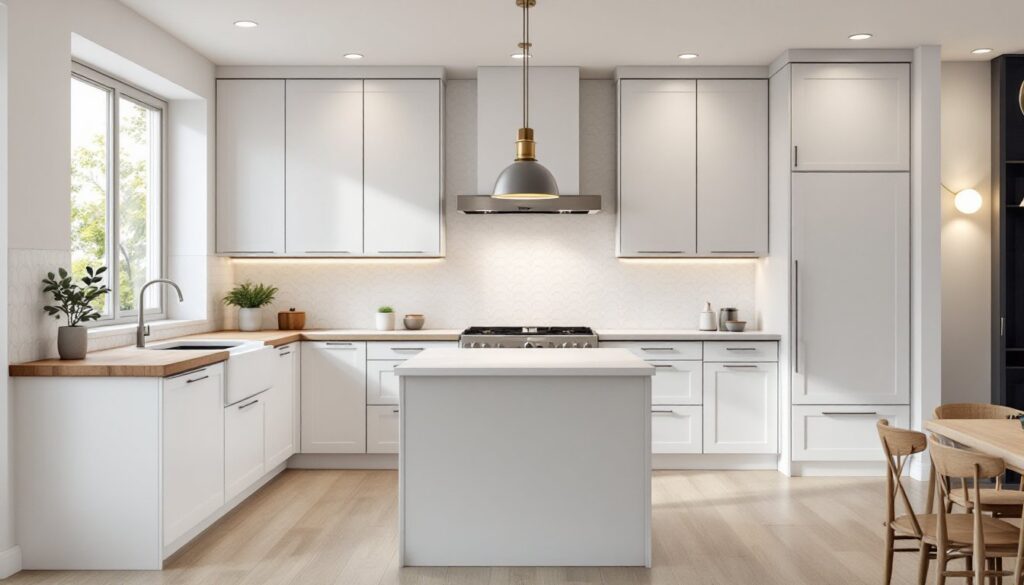
Coastal kitchens lean on soft whites, pale blues, and natural wood tones. Shaker-style cabinetry in painted finishes (Benjamin Moore’s “White Dove” or Sherwin-Williams’ “Sea Salt” are common picks) pairs well with quartz or quartzite countertops that mimic marble without the maintenance headaches. Open shelving, floating or bracket-mounted, adds visual lightness and works well in smaller galley layouts common in older beach cottages.
Mediterranean or Spanish Revival kitchens use warmer palettes: terracotta tiles, hand-painted ceramics, and distressed wood. Cabinet door styles often feature inset or beaded-face frames. Countertops might be honed granite, soapstone, or even poured concrete with integral color. Exposed beams (if structurally present) should be retained or replicated with faux timber if headroom allows. Homeowners inspired by curated design ideas often incorporate antique or reclaimed hardware to reinforce the Mediterranean aesthetic.
Avoid pairing ornate tile work with ultra-modern slab doors or handleless cabinetry, it reads as confused, not eclectic.
Modern and Contemporary Kitchen Designs
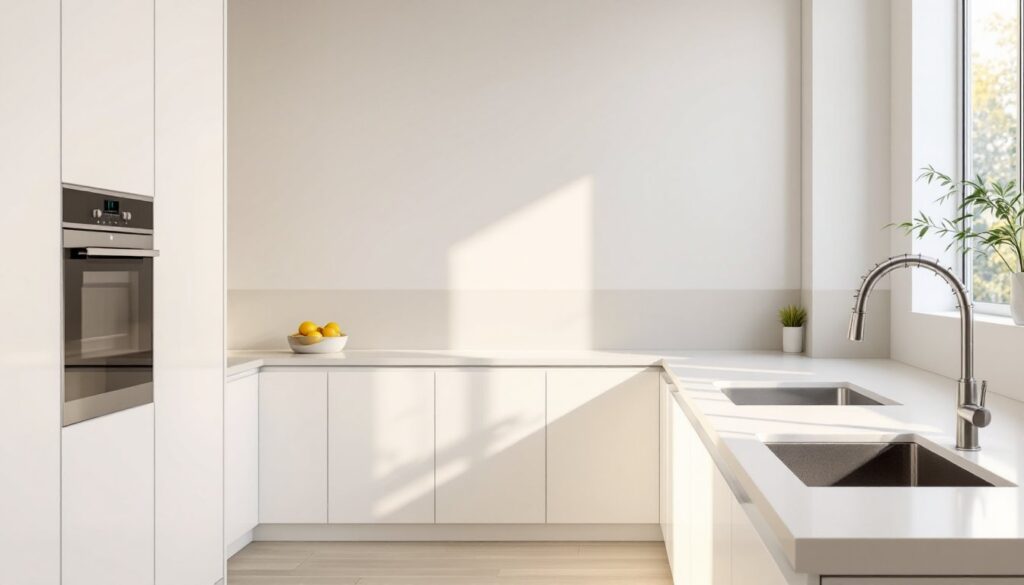
Modern kitchens in San Diego emphasize clean lines, minimal ornamentation, and integrated appliances. Slab-door cabinetry (flat-panel, no frame) in matte finishes, grey, navy, or natural walnut veneer, is standard. Handle profiles are either recessed edge pulls or touch-latch mechanisms.
Countertop material trends toward large-format porcelain slabs or engineered quartz with waterfall edges on islands. Backsplashes are often the same material as the counter, run full-height, with no upper cabinets to interrupt the plane. This works well in open-plan layouts but requires discipline in concealed storage planning.
Lighting is task-focused: recessed LEDs on dimmer circuits, linear pendant fixtures over islands, and under-cabinet puck or tape lighting. Avoid multi-bulb chandeliers or overly decorative fixtures, they fight the aesthetic. When planning small or galley kitchens, many designers reference compact layout strategies to maximize counter and storage area without sacrificing the minimalist look.
Key Elements of a Functional San Diego Kitchen
Style is secondary to function. A beautiful kitchen that doesn’t support how the household actually cooks, cleans, and gathers will frustrate daily.
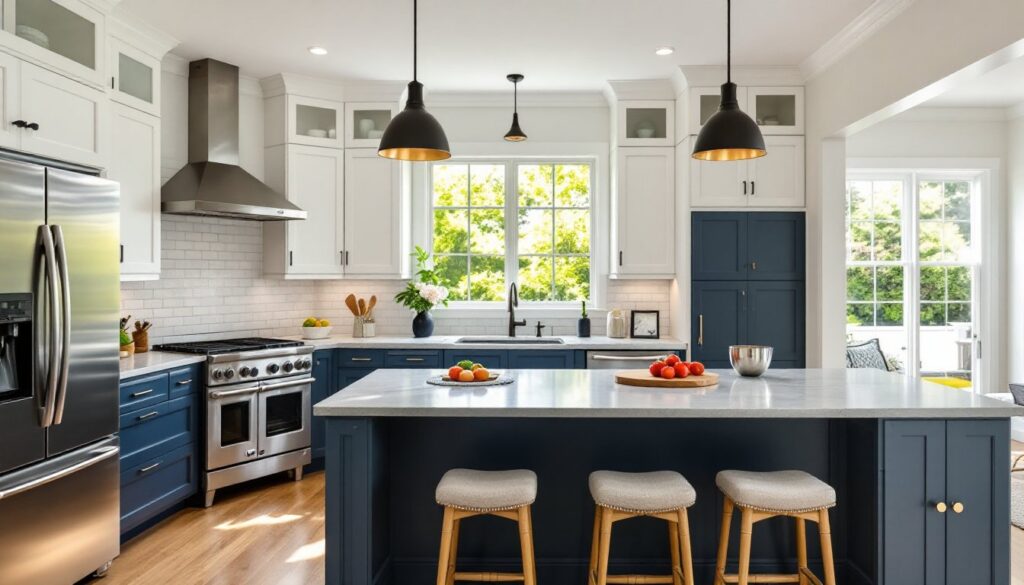
Work triangle vs. work zones: The classic triangle (sink, range, fridge) still applies in smaller kitchens, but larger or open-plan layouts benefit from zoned planning: prep zone (sink, cutting surface, trash), cooking zone (range, oven, spices), and serving/cleanup zone (dishwasher, storage for dishes). Each zone should have dedicated counter space, minimum 15 inches on either side of a cooktop, 18 inches next to a wall oven, and 24 inches of landing space beside the fridge.
Storage and pantry: San Diego homes, especially older stock, often lack generous pantry space. Solutions include:
- Pull-out pantry cabinets (6- to 12-inch filler spaces between appliances)
- Floor-to-ceiling cabinetry to use vertical space
- Drawer-style base cabinets instead of doors with shelves (easier access, less wasted depth)
If space allows, a butler’s pantry or walk-in pantry with adjustable shelving keeps small appliances and bulk goods out of the main kitchen.
Countertop material: Quartz dominates the San Diego market for its low maintenance and consistent patterning. Granite is still common but requires annual sealing. Butcher block adds warmth but demands regular oiling and isn’t ideal near sinks. Concrete and soapstone are niche, beautiful, but expect patina and some staining over time. For practical advice on material maintenance and everyday kitchen use, kitchen care tips offer real-world guidance from experienced home cooks.
Appliances: Match appliance capacity to household size. A 30-inch range is standard: 36-inch ranges offer more burner real estate but eat counter space in tighter layouts. Refrigerators should leave 1 inch clearance on sides and top for ventilation (check manufacturer specs). Built-in or panel-ready units cost more but streamline aesthetics in modern or high-end remodels.
Electrical and plumbing: San Diego follows the 2022 California Electrical Code (based on NEC). Kitchens require:
- At least two 20-amp small appliance circuits
- GFCI protection on all countertop receptacles
- Dedicated circuits for dishwasher, disposal, and range (if electric)
Permits are required for any work that adds circuits, moves gas lines, or alters structural elements. DIYers can handle cosmetic updates (paint, hardware, backsplash), but electrical, plumbing, and load-bearing wall changes need licensed professionals.
Indoor-Outdoor Flow and Connectivity
San Diego kitchens should engage with outdoor spaces, patios, decks, or courtyards, whenever possible. Bi-fold, sliding, or accordion doors (8- to 12-foot spans) open the kitchen to the yard and effectively double usable square footage during gatherings.
Pass-through windows with a counter or bar ledge are easier retrofits than full door systems. Frame openings in existing walls (verify the wall isn’t load-bearing first, look for doubled top plates, perpendicular ceiling joists, or consult a structural engineer). Standard pass-throughs are 36 to 48 inches wide and 30 inches tall, matching standard upper-cabinet dimensions.
Outdoor kitchens or prep stations, even simple setups with a grill, small fridge, and sink, reduce back-and-forth. Plumbing and gas lines must meet California Plumbing Code and CBC standards: freeze protection isn’t a concern, but backflow preventers are required on outdoor hose bibs and sinks.
Flooring transitions: Use the same flooring material inside and out (porcelain tile, luxury vinyl plank, or concrete) to visually extend the space. Transition strips create a psychological barrier: a flush threshold feels more integrated. Ensure exterior-rated materials if moisture or direct sun exposure is involved.
Finding the Right Kitchen Designer in San Diego
San Diego has no shortage of kitchen designers, remodelers, and design-build firms. Choosing the right partner depends on project scope, budget, and how much design direction the homeowner wants to provide.
Certified Kitchen Designer (CKD) credentials indicate formal training in spatial planning, ergonomics, and code compliance. Not required, but helpful if tackling complex layouts or structural changes. Ask for a portfolio of local projects, designers familiar with San Diego’s permitting process, coastal construction challenges, and climate-specific material performance will save headaches.
Design-build firms handle design and construction under one contract. This streamlines communication and accountability but may limit material or subcontractor choices. Get at least three bids and compare scope line-by-line, “kitchen remodel” can mean vastly different things.
Independent designers create plans and specs: the homeowner hires contractors separately. This offers more control and potentially lower costs but requires more project management. Ensure the designer provides detailed drawings (plan, elevation, and section views) and a specification sheet listing exact materials, finishes, and appliance models. Vague plans lead to cost overruns and change orders.
Permits and timelines: Most kitchen remodels in San Diego require permits if they involve electrical, plumbing, gas, or structural work. Plan 4 to 6 weeks for plan review and permitting, then 6 to 12 weeks for construction, depending on scope and material lead times. Custom cabinetry can add another 8 to 12 weeks.
Budget: In San Diego (2026), expect:
- Minor refresh (paint, hardware, backsplash): $5,000–$15,000
- Mid-range remodel (new cabinets, counters, appliances, flooring): $40,000–$80,000
- High-end remodel (custom cabinets, premium appliances, structural changes): $100,000–$200,000+
Prices vary by neighborhood, material grade, and labor availability. Get written estimates and verify contractor licenses (CSLB license lookup at cslb.ca.gov) and insurance before signing contracts.