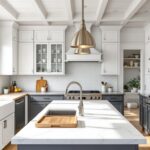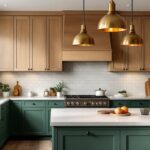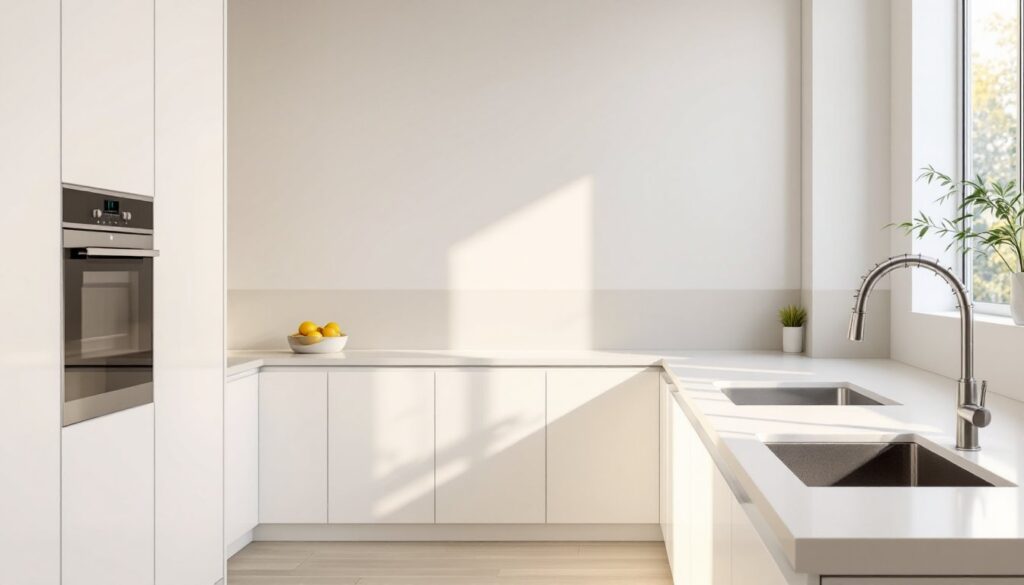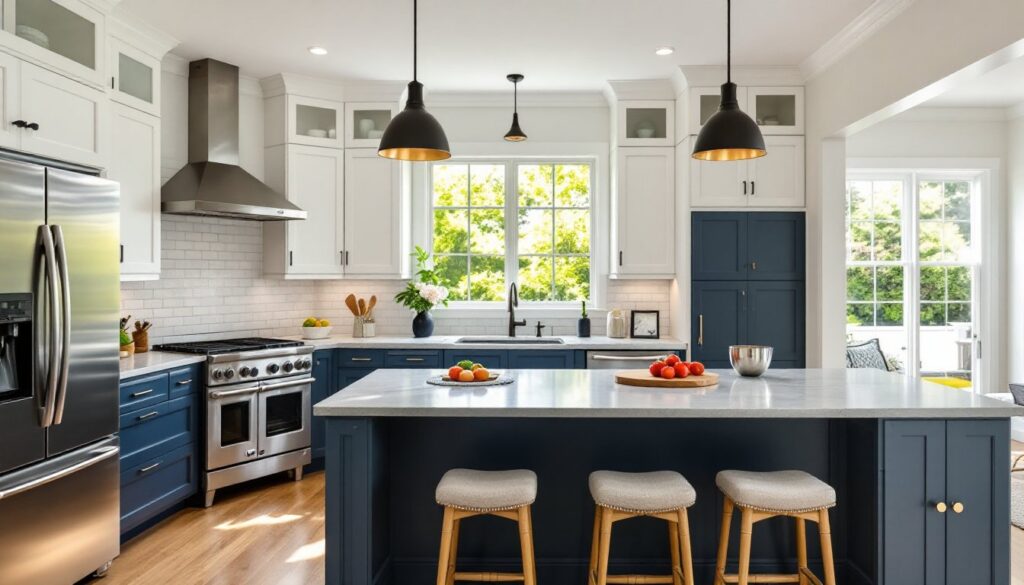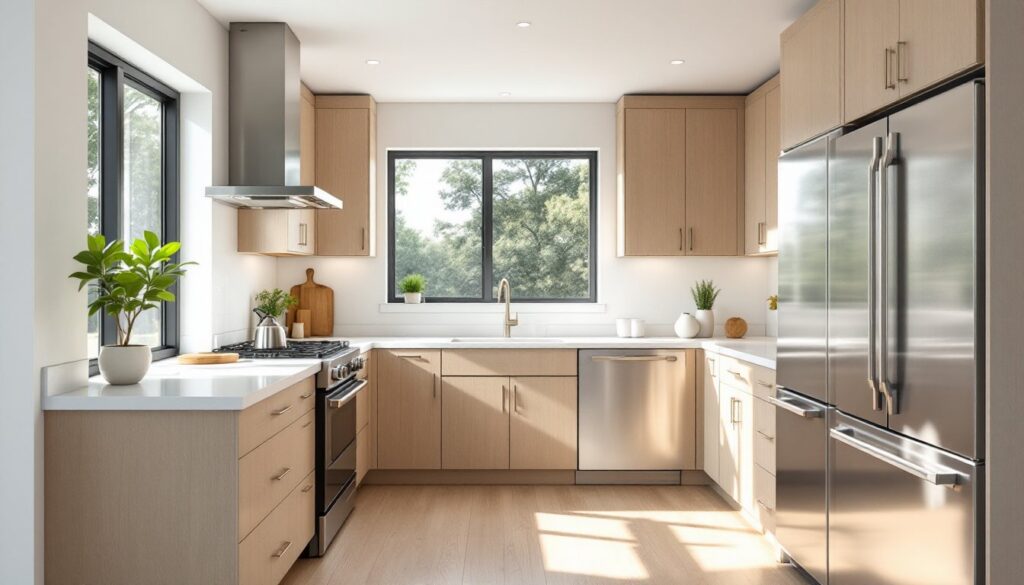

An L-shaped kitchen isn’t just a layout, it’s a solution. Whether you’re renovating a cramped galley or planning a new build, this configuration offers flexibility, efficient workflow, and surprisingly generous counter space. It’s one of the most adaptable designs in residential construction, fitting everything from compact condos to sprawling open-concept homes. And in 2026, with homeowners prioritizing function over fuss, the L-shape is having a moment. This guide walks through what makes it work, where it shines, and how to avoid the pitfalls that trip up even experienced renovators.
Key Takeaways
- An L-shaped kitchen design maximizes workflow efficiency by positioning the sink, range, and refrigerator within 4–9 feet of each other, following ergonomic work triangle standards.
- L-shaped kitchen layouts yield 20–25 square feet of counter space in a compact 10×10-foot footprint, making them cost-effective alternatives to U-shaped or galley designs.
- Invest in smart corner solutions like pull-out shelves or LeMans-style units ($400–$700) rather than standard blind cabinets to nearly double usable storage volume.
- Proper task lighting with at least 50 lumens per square foot over work zones and undercabinet LED strips is critical to avoid the common pitfall of poor illumination.
- Always verify appliance placement respects clearance codes: 12 inches minimum from perpendicular walls for the range, 36 inches from sink for dishwasher placement, and ensure GFCI outlets and gas shutoff valves meet local requirements.
- An L-shaped kitchen layout adapts seamlessly to spaces ranging from compact 8×8-foot apartments to sprawling family homes, and leaves room for adding an island without crowding the workspace.
What Is an L-Shaped Kitchen and Why Is It So Popular?
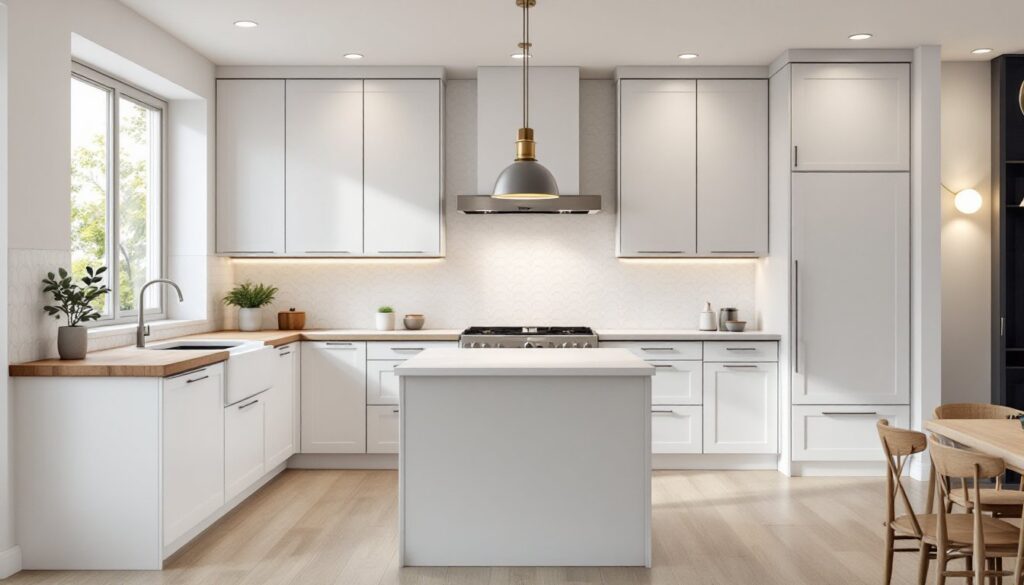
An L-shaped kitchen consists of two perpendicular runs of cabinetry that meet at a corner, forming an “L.” One leg typically runs along a wall, the other extends outward or turns to meet an adjacent wall. It’s a layout that adapts to nearly any floor plan, small, large, square, or rectangular.
This design gained traction in mid-century residential construction because it fit postwar tract homes, but it’s stuck around because it works. The corner creates a natural work zone without the corridor bottleneck of a galley or the sprawling footprint of a U-shape. You get two walls of storage and prep space without blocking sightlines or cutting off the room.
The L-shape is especially popular in open-plan homes where the kitchen flows into a dining or living area. One leg can anchor against a wall while the other defines the kitchen boundary without needing a full peninsula or island. It’s also a top choice for homeowners adding an island later, there’s usually room in the open side of the L to drop one in without crowding the work triangle.
In smaller homes or apartments, the L-shape maximizes usable square footage. You’re not wasting space on a fourth wall of cabinets (like a U-shape) or dealing with the narrow confines of a galley. It’s efficient without feeling cramped, which is why designers and contractors keep coming back to it.
Key Benefits of Choosing an L-Shaped Kitchen Layout
The biggest advantage is workflow efficiency. With two adjacent walls of cabinetry, you can position your sink, range, and refrigerator in a classic work triangle without excessive steps between stations. Most L-shaped kitchens keep all three appliances within a 4- to 9-foot range, which falls right in line with ergonomic kitchen design standards.
Counter space is another win. Both legs of the L offer uninterrupted runs for prep work, and the corner, if designed well, can house a sink or range without eating into usable countertop. A standard 10×10-foot L-shaped kitchen typically yields around 13 linear feet of base cabinets, translating to roughly 20–25 square feet of counter surface. That’s more than most galley kitchens and nearly on par with U-shapes in tighter footprints.
The layout also promotes natural traffic flow. Because one side of the kitchen is open, people can move through without cutting across your workspace. This is critical in homes where the kitchen doubles as a pass-through to other rooms. If you’re cooking while kids are running in and out, you won’t be dodging elbows every thirty seconds.
Flexibility is another reason L-shapes dominate remodels. You can scale the design to fit almost any room size. A compact 8×8-foot corner works for a studio apartment: a 12×15-foot version can anchor a family home. And because there’s no fourth wall of cabinets, you can easily add a dining table, island, or even a small seating nook without major structural changes.
Finally, L-shaped kitchens tend to be budget-friendly compared to U-shapes or galley kitchens with islands. You’re working with two walls of cabinetry instead of three or four, which cuts material and labor costs. Installation is straightforward, most carpenters can frame and hang cabinets in an L-configuration in a day or two, assuming walls are plumb and level.
Essential Design Elements for Your L-Shaped Kitchen
Maximizing Storage and Counter Space
The corner is where most L-shaped kitchens live or die. A blind corner cabinet is the cheapest option, but it wastes about 50% of interior space unless you add pull-out shelves or a lazy Susan. For serious storage, consider a corner drawer system or an LeMans-style pull-out unit. Both cost more upfront, typically $400–$700 versus $150–$250 for a standard blind base, but they nearly double usable volume.
If you’re putting a sink in the corner, spec a cabinet at least 36 inches wide on each leg to allow room for plumbing and undermount clips. A corner sink opens up both adjacent counters for prep work, but be warned: you’ll need a custom countertop cut and possibly a special faucet with extended reach. Not every fabricator is comfortable with those cuts, so confirm capabilities before you order stone or quartz.
For counter space, prioritize one continuous run of at least 36 inches for primary prep. This is where you’ll chop, roll dough, and stage ingredients. The National Kitchen & Bath Association (NKBA) recommends a minimum of 15 inches of counter on either side of the cooktop and 24 inches on one side of the sink, plan your layout accordingly.
Don’t overlook vertical storage. Wall cabinets in an L-shape should run to the ceiling if possible, especially in kitchens with 9-foot or taller ceilings. The top shelves are harder to reach, but they’re perfect for seasonal items, serving platters, or small appliances you don’t use daily. Use a sturdy step stool, not a chair.
Open shelving can break up a long run of cabinets and add visual interest, but keep it to one section, maybe 24 to 36 inches. Any more and you’re sacrificing enclosed storage, which tends to be more practical for most homeowners. Examples of contemporary kitchen layouts often show how designers balance open and closed storage in L-configurations.
Smart Appliance Placement and the Work Triangle
The refrigerator should anchor one end of the L, ideally on the shorter leg or near the entry. This keeps traffic out of the main work zone and makes it easy for someone to grab a drink without crossing your path while you’re at the stove. Allow at least 15 inches of counter space on the latch side so you have a landing zone for groceries and leftovers.
Position the range or cooktop along the longer leg, at least 12 inches from any perpendicular wall or tall cabinet. This gives you clearance for pot handles and reduces fire risk. If you’re installing a range hood, verify headroom and duct routing before framing. Most hoods need a straight shot to an exterior wall: if you have to vent through the roof or make multiple bends, you’ll lose CFM (cubic feet per minute) efficiency and might need to upsize the blower.
The sink often goes in or near the corner, especially if there’s a window on one leg. Plumbing is easier to run along exterior walls, and natural light at the sink is a quality-of-life upgrade. If you’re on a slab foundation, though, moving plumbing can mean breaking concrete, budget $1,500–$3,000 for rerouting if needed.
Aim for a work triangle where the sum of all three legs (fridge to sink, sink to range, range to fridge) is between 13 and 26 feet, with no single leg longer than 9 feet. This isn’t a hard code requirement, but it’s an NKBA guideline that’s stood the test of time. In an L-shape, hitting these numbers is usually straightforward as long as you don’t shove all three appliances onto one leg.
For dishwashers, place them within 36 inches of the sink, preferably on the side closest to your dish storage. This minimizes plumbing runs and makes unloading more efficient. If you’re right-handed, put the dishwasher to the left of the sink: if left-handed, reverse it. It’s a small detail, but it matters when you’re loading dirty plates with wet hands.
Many homeowners tackle kitchen organization projects by rethinking appliance zones and creating dedicated prep, cook, and cleanup stations within the L-shape footprint.
Common Mistakes to Avoid When Designing an L-Shaped Kitchen
The most frequent error is ignoring the corner. A standard 90-degree cabinet join creates a dead zone, sometimes two feet deep, that’s nearly impossible to access. If you don’t plan for a lazy Susan, pull-out shelves, or a diagonal corner sink base, you’re throwing away storage. Measure the interior corner dimension (usually 24×24 inches or larger) and choose hardware that actually fits. Plenty of homeowners buy a lazy Susan that’s too big, only to find it binds against the cabinet face frame.
Skimping on landing space is another classic misstep. You need counter on both sides of the range (at least 12 inches on one side, 15 on the other) and adjacent to the fridge. If your layout is tight, consider a microwave shelf or pull-out cutting board to create temporary landing zones. Don’t rely on the stovetop as a landing area, it’s a burn risk and a code violation in some jurisdictions.
Poor lighting kills even the best layout. An L-shape needs task lighting over each work zone: pendant or recessed lights above the sink, undercabinet LED strips along both legs, and a dedicated fixture over the range (integrated into the hood or a separate recessed can). One central ceiling fixture isn’t enough. Aim for at least 50 lumens per square foot in task areas, 30 lumens per square foot ambient.
Another pitfall: blocking windows or doorways with tall cabinets or appliances. If one leg of your L runs along a wall with a window, don’t box it in with upper cabinets that cut off light. Use open shelving, shorter cabinets (30 or 36 inches instead of the standard 42 inches), or leave that section open entirely. Similarly, don’t position the fridge or pantry where it blocks a doorway swing.
Ignoring ventilation is a health and safety issue. If you’re installing a range on an interior wall, you’ll need a ductless range hood with a high-quality charcoal filter, or you’ll need to run ductwork through the ceiling or attic. Ductless hoods are less effective, they recirculate air rather than exhausting it, so if you cook frequently or use high-BTU gas burners, bite the bullet and duct it properly.
Finally, don’t forget about electrical and plumbing access. An L-shape often puts the sink and range on perpendicular walls, which can mean running new lines if you’re converting from a different layout. Consult local codes: most jurisdictions require GFCI outlets within 6 feet of a sink, and gas ranges need a dedicated shutoff valve within 6 feet of the appliance. Hire a licensed electrician and plumber if you’re not confident in your skills, this isn’t the place to learn on the job.
Inspiration for avoiding these mistakes can be found in curated home design galleries that showcase real-world L-shaped renovations with detailed photography.
Conclusion
An L-shaped kitchen layout delivers efficiency, flexibility, and room to grow, if you plan it right. Focus on smart corner solutions, respect the work triangle, and don’t sacrifice lighting or landing space to save a few bucks. Whether you’re framing a new build or tearing out old cabinets, this layout adapts to your space and your workflow. Measure twice, spec once, and you’ll end up with a kitchen that works as hard as you do.